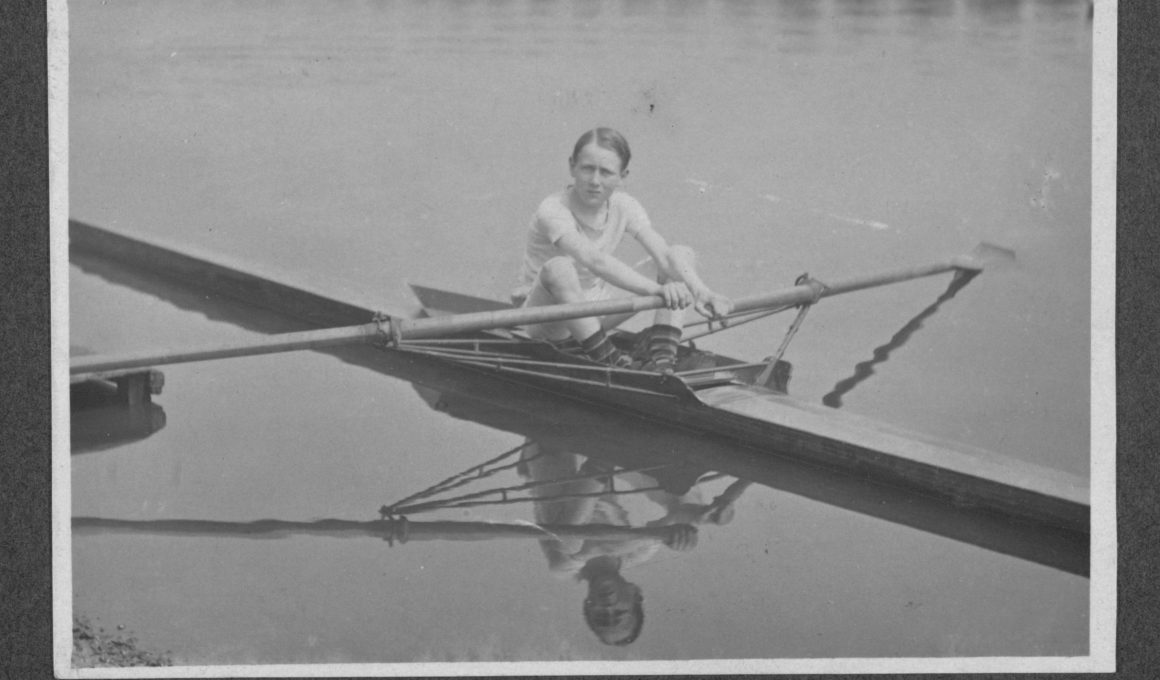
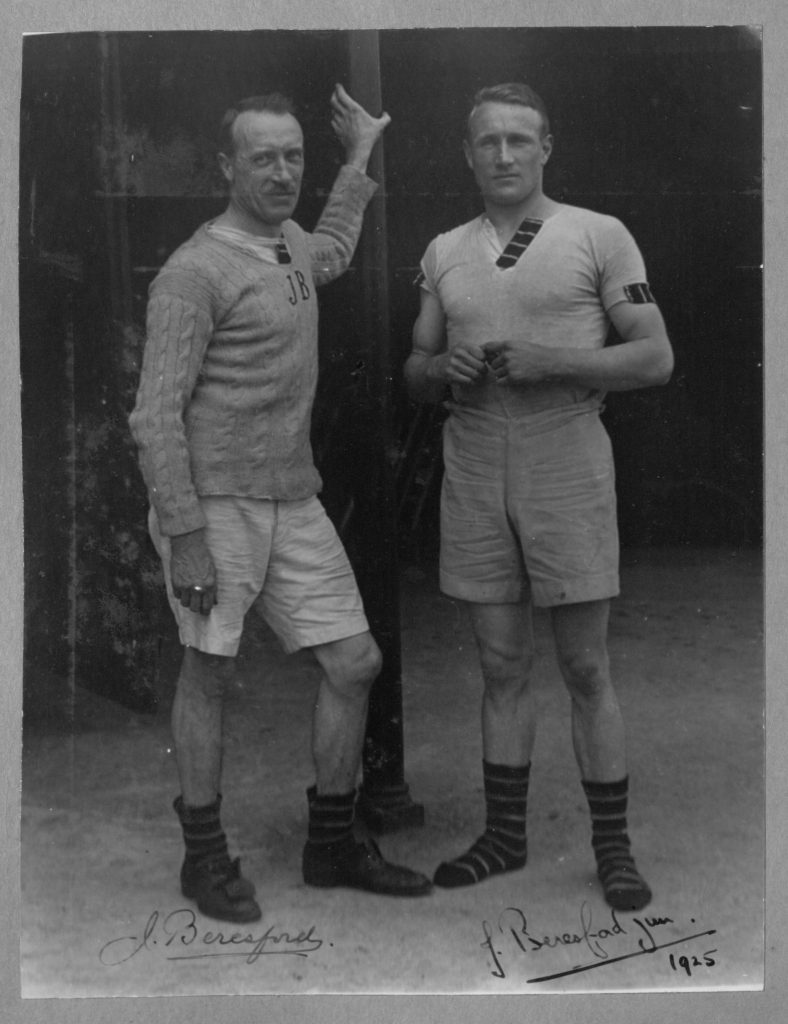
A boy of twelve and a half stands on the Thames. The water is still. Beneath the photograph, in his own careful handwriting, he has written his name: J. Beresford.
He grew up to row in five Olympic Games. He won three golds and two silvers. Before Steve Redgrave, he was the most successful British Olympian in any sport. And he kept a record of all of it: six large albums of photographs, postcards, telegrams and newspaper cuttings, every page personally captioned. Until now, that record has been seen only by his family.
The albums belong to Jack Beresford, the most famous member in Thames Rowing Club’s 166-year history. Thames RC archivist James Elder is digitising the lot. Selected photographs will go online later this summer. Ten of them, including the one above, are being released early to mark a talk at the club next month by Jack’s son John, who is bringing a selection of his father’s medals.
He didn’t just row from Putney. He trained here, raced here, and documented the embankment as it was. The 1925 photograph below is, on its own, a piece of local history that no public archive holds.
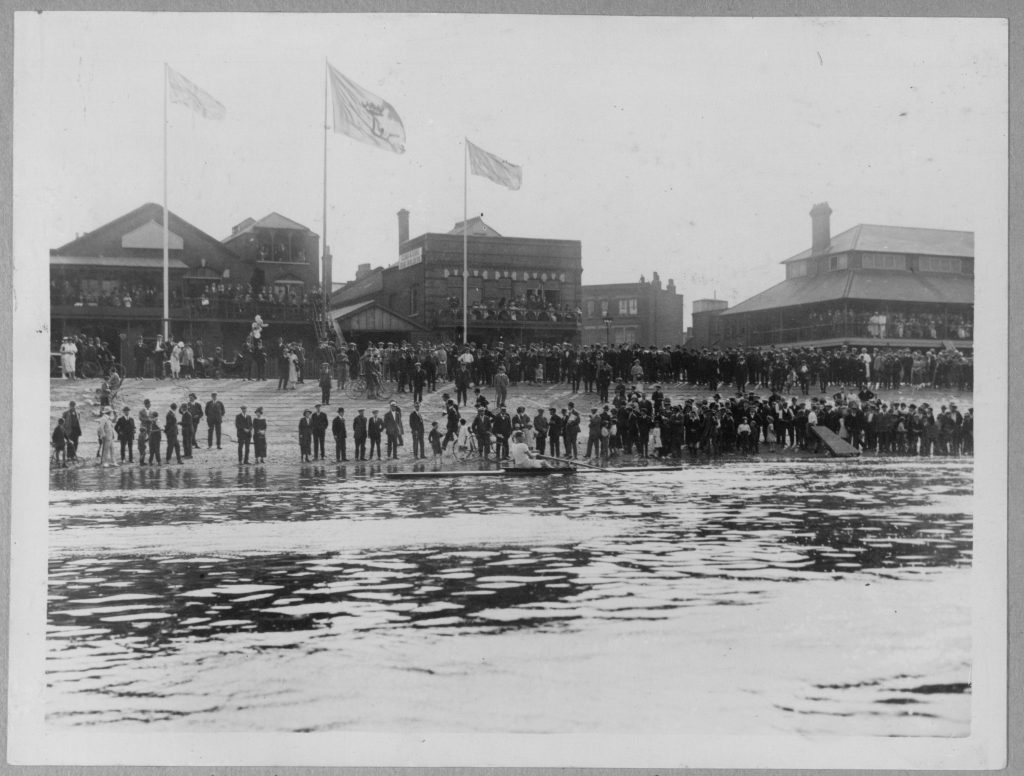
Hundreds of Putney residents are lined along the foreshore. The river is busy. On the opposite bank, the buildings of Alex Duckham & Co. and the Wharf Shirt Factory mark out an industrial north shore that is now entirely gone. The crowd has come to watch Beresford race the American champion Walter Hoover. The handwritten caption beneath the next photograph records the result.
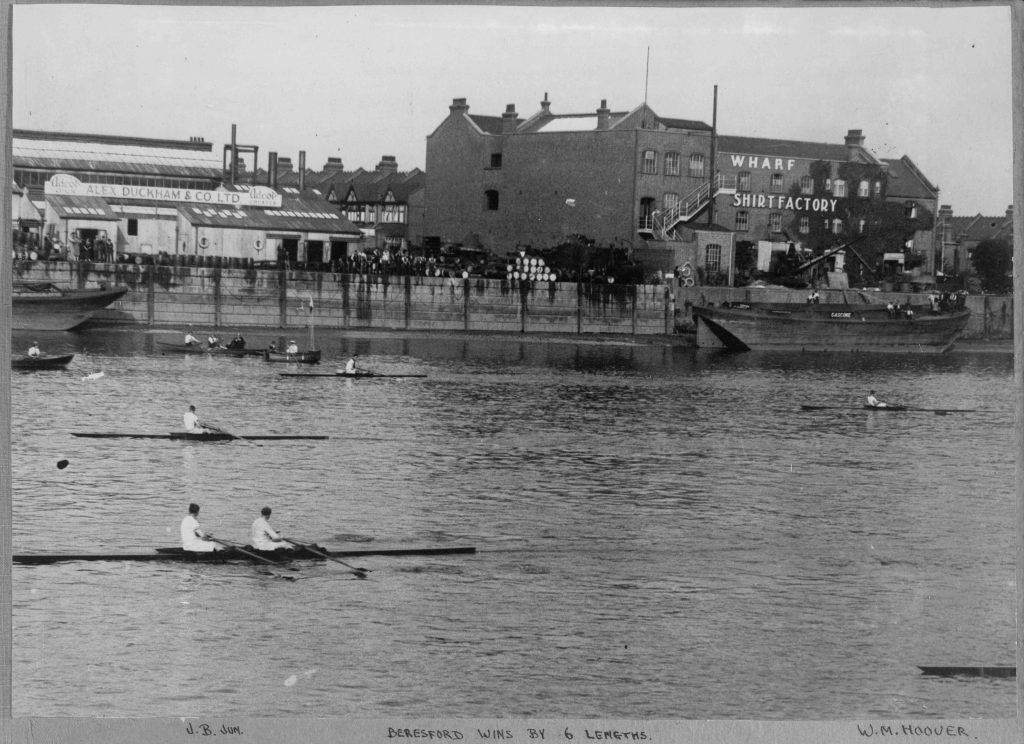
Beresford wins by six lengths. He has written the words himself, in pencil, beneath the picture.
Five Games, three decades
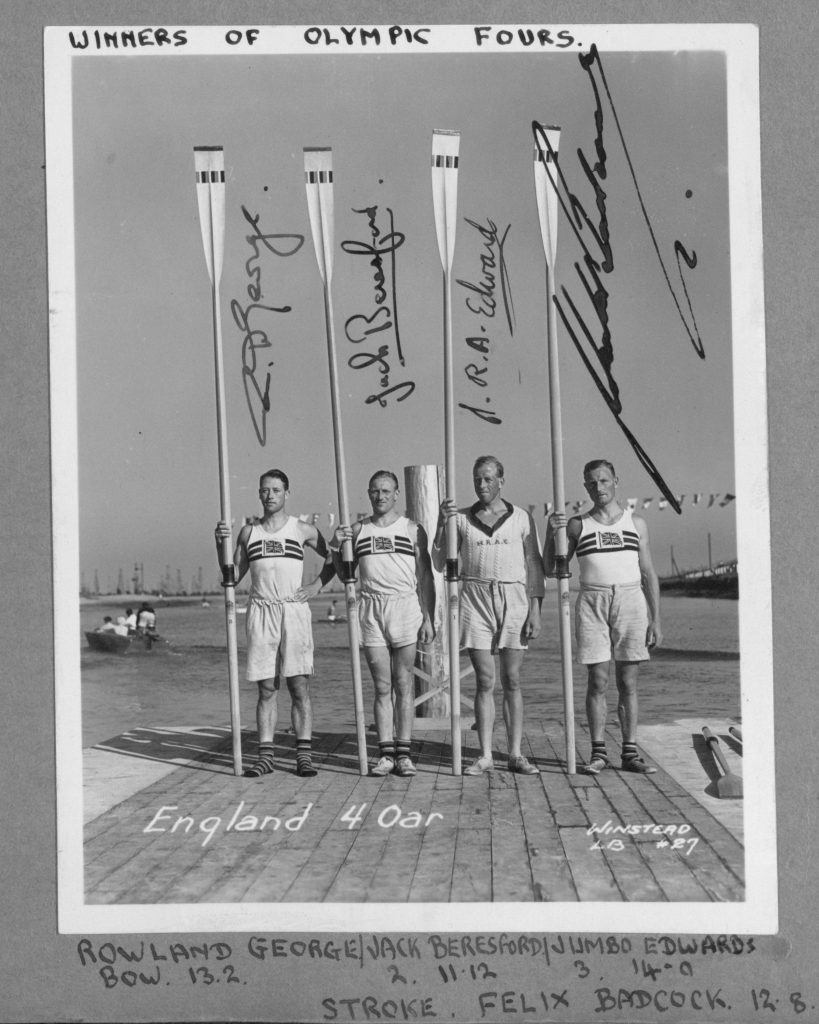
By the time the Hoover photograph was taken, Beresford had already won silver in the single sculls at the 1920 Antwerp Olympics. He went to Paris in 1924 and won gold. In Amsterdam in 1928 he was in the Thames Rowing Club crew, racing for Great Britain, that won silver in the eight. In 1932 the British team travelled to Los Angeles by sea and rail, the train pictured in his albums crossing the Arizona desert under a hard sun. He won gold in the coxless four. The signed team photograph from those Games (Rowland George, Jack Beresford, Jumbo Edwards and Felix Badcock, each name in their own hand) is among the images now being prepared for release.
Putney’s rowing tradition is older than its bridges, and it is older than its boathouses. Thames RC was founded in 1860, a year before the Boat Race moved to its present course. The club has gone on producing scullers and oarsmen ever since. Last year’s centenary Head of the River Race showed the same boats still going out from the same stretch of river. The Victorian boathouses Beresford rowed from are still there too, restored, the embankment in front of them now lined with people walking dogs rather than watching scullers.
Berlin
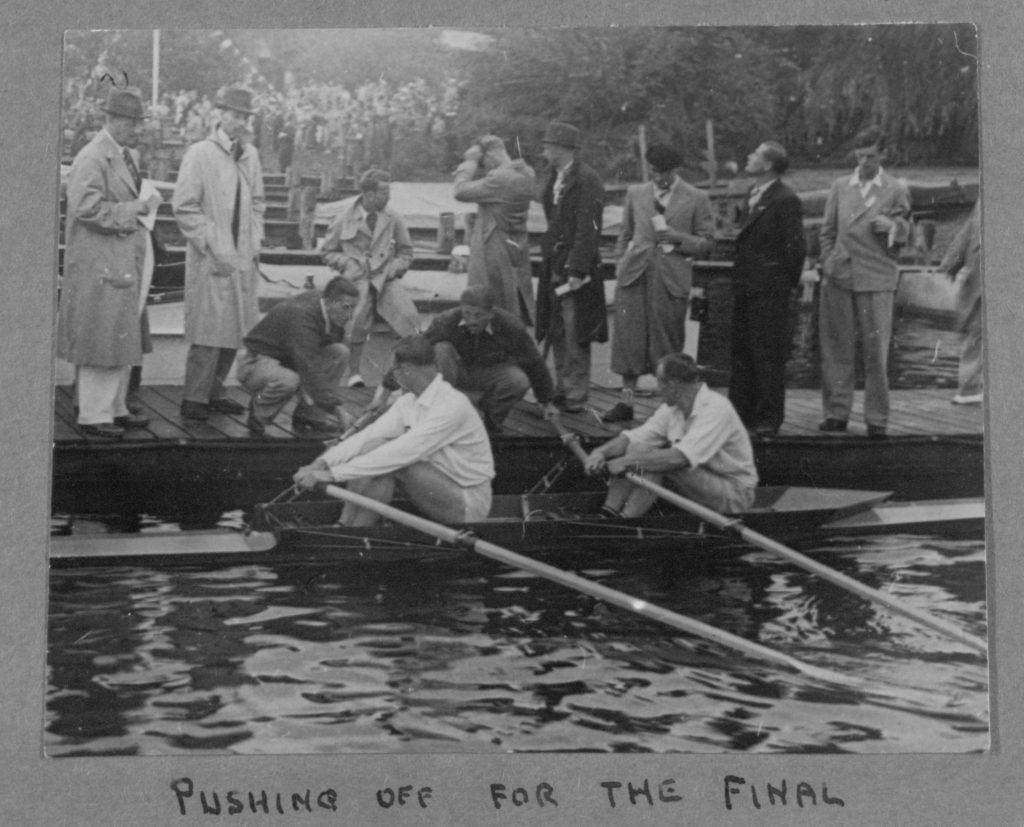
The men in overcoats on the pontoon are German officials. The two men in the boat are Beresford and Dick Southwood. The photograph is captioned, in Beresford’s hand: “Pushing off for the Final.”
This is the 1936 Berlin Olympics. The Games at which Germany won 89 medals and 38 golds. The Games which Hitler intended as a showcase for the National Socialist state. In rowing, Germany dominated: of the seven gold medals, Germany took five. Only two went elsewhere. One was the men’s eight, taken by a working-class American crew from the University of Washington. The other was the double sculls, taken by Beresford and Southwood.
It was Beresford’s third gold and his fifth and last Olympic Games. He was 37.
The albums
“Jack was a keen photographer and scrap booker, putting together six large albums of around 100 pages each from his school days, through the First World War and his rowing career,” James Elder says in the press release accompanying the photographs. “Together they form a fascinating record of the life of one of the UK’s greatest sportsmen. Until now this material has been open only to Jack’s family.”
There are also the loose photographs. The newspaper cuttings. The telegrams. Captions in pencil and in ink. Some signed by teammates, some signed by Beresford himself. The digitisation project is still under way; the public release is set for later in the summer.
A talk in June
On Wednesday 3 June, John Beresford will speak about his father at the Thames RC clubhouse on Putney Embankment. He is bringing some of the medals.
“Dad always had the ability to chat to anybody,” John says, “but didn’t ‘suffer fools gladly’. He wasn’t a stuffy rowing heavy.”
The event runs from 19:00. Tickets are £5 including light refreshments and are available at thamesrc.co.uk. It marks the 90th anniversary of the Berlin Games.
The boy in the lead photograph is twelve and a half. He has signed his name. The river behind him has not changed.