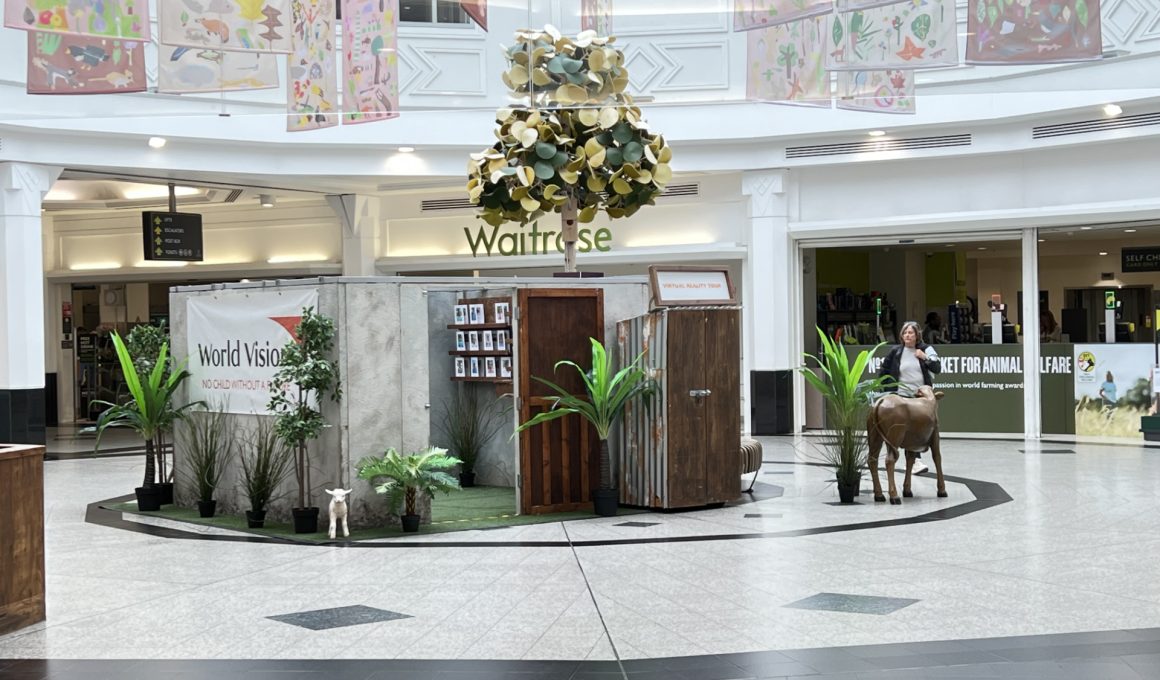
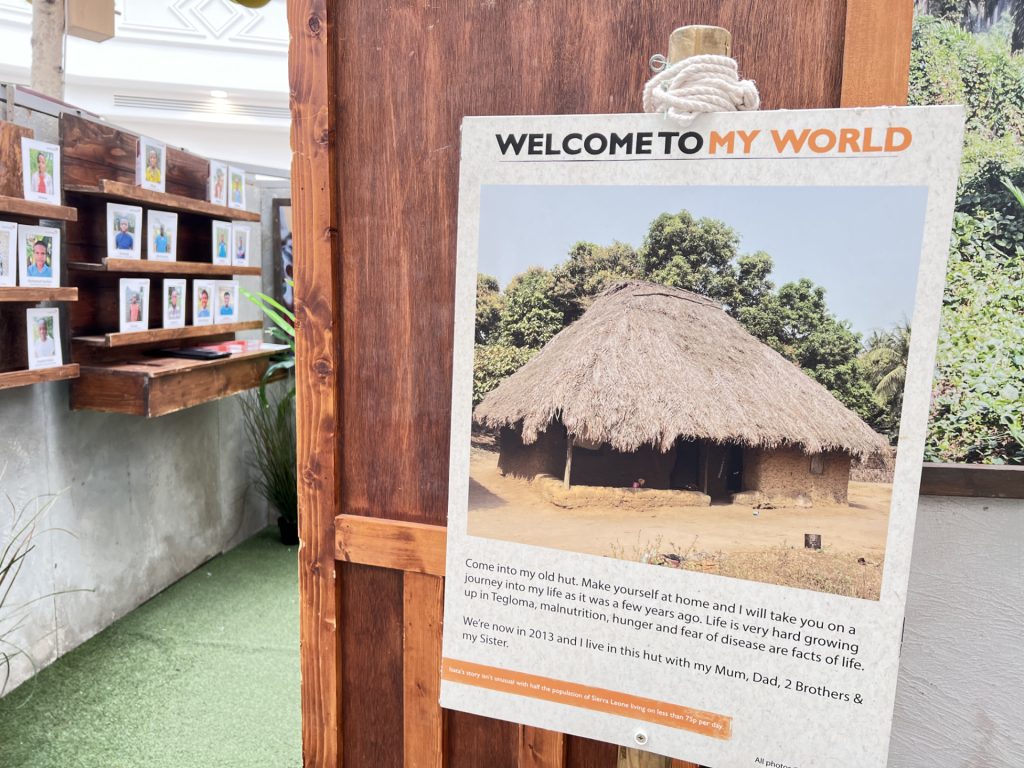
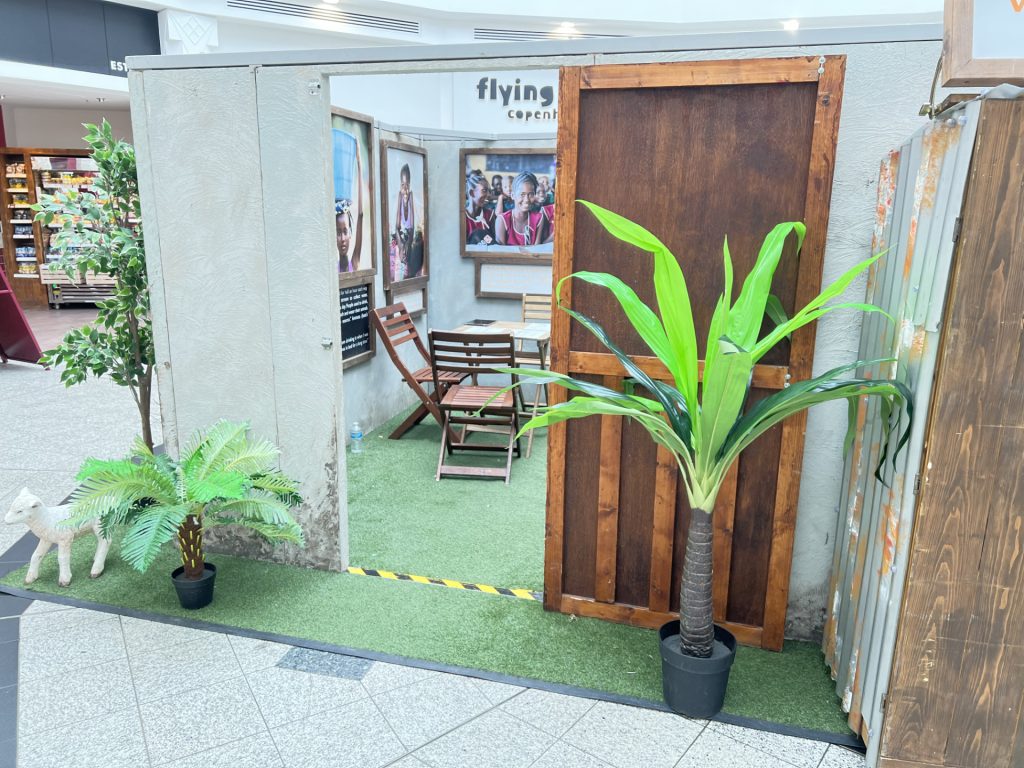
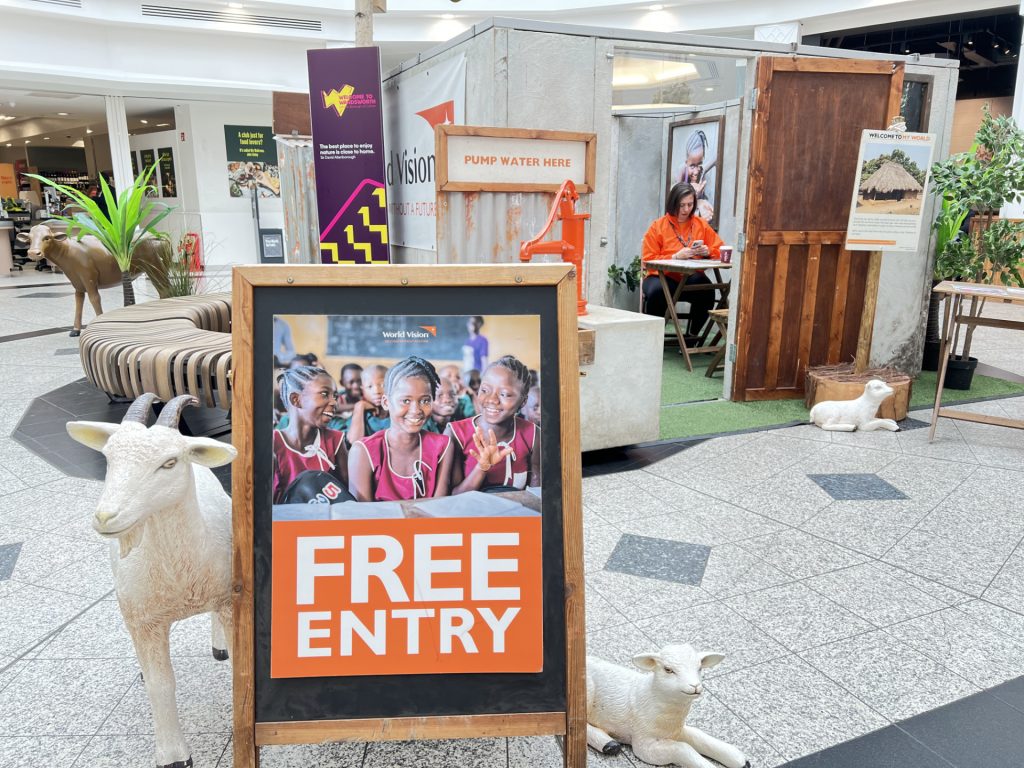
Something unusual has turned up in the central atrium of the Putney Exchange this week. In the centre by Costa and Waitrose, a small rural dwelling has been built. Corrugated iron walls, tropical plants, a working hand pump marked “PUMP WATER HERE”, a wall of children’s photograph cards, and a booth offering a virtual reality tour of somewhere far from SW15.
It belongs to World Vision, the Christian child sponsorship charity. This week, one corner of the Putney Exchange has become an invitation to sponsor a child for £1 a day.
Aaron, the World Vision fundraiser on the stand, explains the model. The charity works only in rural areas, focusing on food, water, healthcare, education, child protection, and helping families earn their own income. A £30 monthly sponsorship goes to one named child and, he says, benefits roughly four others as the village’s resources improve. “Technically five children are benefitting… for £30 a month,” he says. “A meal if we went to, I don’t know, Nando’s.”
The example on the stand is Isaeta. World Vision met her in Sierra Leone when she was eight, turning nine. She was at risk of being married off to a man of 40 and was walking 30 to 45 minutes each way for water. A sponsor in the UK, a Mrs Morgan whose name Aaron has permission to use, began funding her. A clean water pump was installed in her village, which also serves the one next door. Isaeta is now around 13, in school, and wants to be a doctor. Mrs Morgan has flown out to meet her.
Transparency, and a familiar question
Sponsorship is meant to be a relationship rather than a transfer of money, Aaron says. Sponsors can write letters, send emails, telephone, or get on a plane and visit. “The sponsorship journey is very, very transparent,” he says.
The stand is also where a familiar concern gets raised. Asked about the issue of well-meaning paternalism dressed as help, Aaron doesn’t duck it. The vast majority of World Vision staff, he says, were born, raised and still live in the communities the charity serves. “The people that are actually doing the work on the ground are people that speak the language,” he says. “We ask and approach the families if they actually want help.”
He also thinks about it from the other end. “It’s equally as important to get a good sponsor for someone as it is just to get a sponsor for a child,” he says. After every conversation at the stand, he says, he is checking whether the person he has just spoken to has a good heart.
The stand is in the atrium until the end of the week. If you are in the Exchange, it is worth a minute to stop and talk to whoever is manning the stand. If you miss it, worldvision.org.uk/sponsor-a-child does the same job from a sofa, with rather less atmosphere.
Three local charities, next door
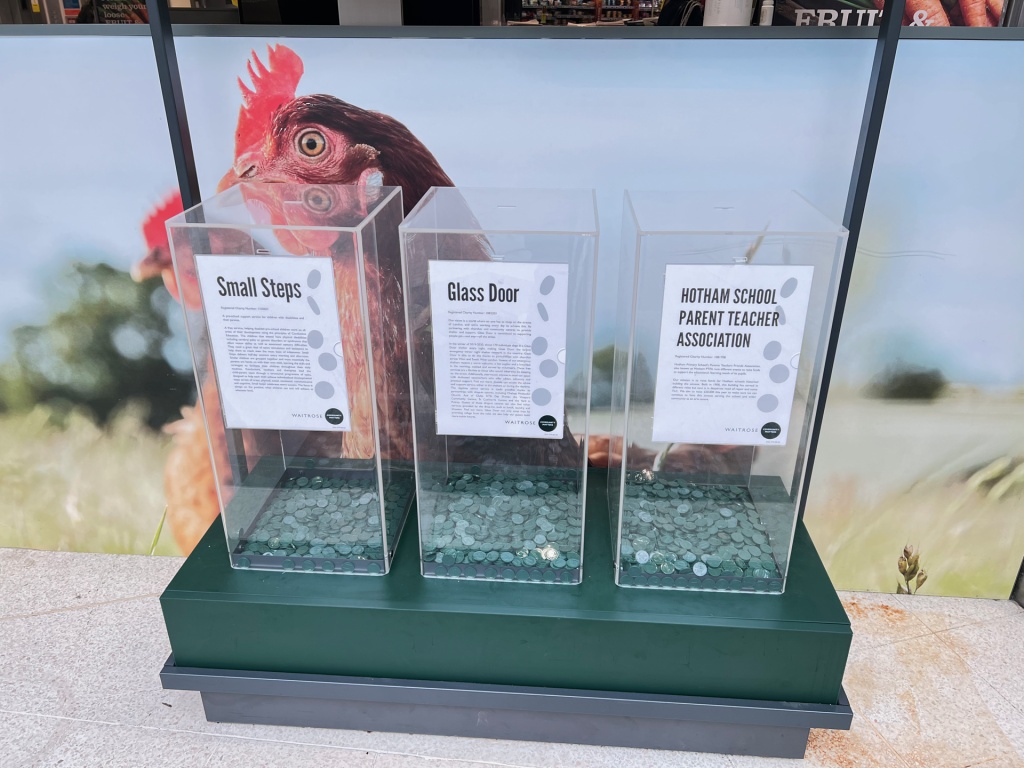
If you are in Waitrose on the way out, three other charities are also asking for your coin this quarter. Pick up a free green token at the till, drop it in the box of the charity you want to support, and Waitrose splits a £3,000 pot between the three at quarter-end, with £1,500 for the winner.
April’s three at the Putney branch are Small Steps, a free London pre-school service for children with cerebral palsy and other motor and sensory impairments, working with parents and children together on conductive education; Glass Door, an emergency winter night-shelter network that partners with churches across West and South West London and runs a drop-in at the Yard in Putney; and the Hotham School PTFA, the parents’ group at Hotham Primary on Charlwood Road, raising £50,000 this year to save the school’s 1908 annexe and keep it running as an arts centre for pupils and the wider community.
The voting station is behind the self-checkout tills.