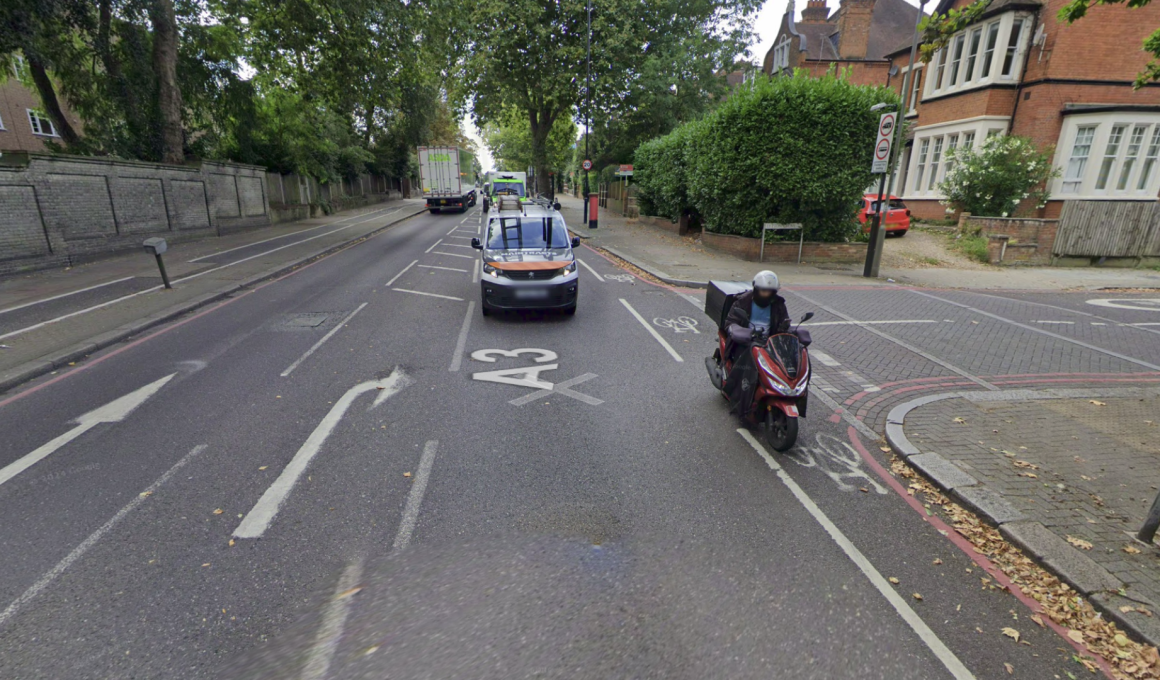
Two new signs will be installed by the end of the month at the West Hill junction where cyclist Dean Jones was killed 15 months ago, local MP Fleur Anderson announced this week.
The signs will mark the weight restriction on Lytton Grove, covering both directions. Transport for London will also conduct another safety audit of West Hill, Anderson said. This is the tangible outcome 15 months after the 27-year-old’s death, when Anderson pledged to do “everything in my power to ensure this can never happen again”.
The junction now ranks ninth most dangerous in London for cycling, with one fatality, one serious collision and seven slight collisions in the past five years. But competing demands on London’s narrow roads mean the outcome is improved signage and a right-turn ban rather than the wholesale closure cycling campaigners wanted.
Closing Lytton Grove would remove the danger for cyclists, but the street is a vital cut-through between main roads, allowing drivers to avoid two of Putney’s most congested junctions. Shutting it would push more traffic onto already gridlocked routes.
Dean Jones, a chartered accountant who had qualified just a month before his death, was killed on November 2, 2024 when an HGV turning left into Lytton Grove struck him as he cycled to meet friends for lunch. He was riding a hired Forest e-bike in a non-segregated cycle lane marked only with a broken white line.
The London Cycling Campaign says closing Lytton Grove to through traffic “would have removed the road danger issues at the junction almost instantly”. At a meeting with Transport for London, Wandsworth officers and Anderson, officials dismissed the closure suggestion and agreed instead on improved signage for the existing 7.5 tonne weight restriction.
The council has also banned right turns out of Lytton Grove, a measure that appears to be permanent though the council has not formally confirmed this.
Council leader ‘failed to engage’
The London Cycling Campaign’s report documents repeated failures to address cycling safety at the junction despite mounting pressure.
“Despite pressure from the local MP Fleur Anderson and campaigners, Wandsworth council leader Cllr Simon Hogg has failed to engage over Dean’s death, while officers have defended the council’s safety reputation instead of pushing for changes to the junction,” it states.
The junction sees an average of two cyclists suffering serious injuries annually. A 7.5 tonne weight restriction on Lytton Grove with exemptions for local deliveries was already in place before Dean’s death, but campaigners say it is poorly signed and unenforced.
Wandsworth has three of London’s top 10 dangerous junctions
The West Hill junction is one of three Wandsworth locations in the London Cycling Campaign’s top 10 most dangerous junctions. The borough also holds the unenviable top spot: Upper Tooting Road has seen 10 serious and 21 slight collisions in the past five years, though fortunately no fatalities.
The concentration of dangerous junctions in Wandsworth reflects broader tensions across London. The London Cycling Campaign pushes for protected cycle lanes and low traffic neighbourhoods to improve cycling safety. But motorists face increasing congestion, partly caused by bus and cycle lanes reducing two car lanes to one, 20mph zones and low traffic neighbourhoods. London is now the slowest city in the world to drive in.
On narrow Victorian streets, road space has become a zero-sum game. Gains for cycling safety often mean losses for traffic flow. The West Hill junction illustrates this tension: closing Lytton Grove would remove the danger for cyclists but would push more vehicles onto already congested routes, worsening gridlock for everyone else.
Right-turn ban appears permanent
Wandsworth Council started a trial in June 2025 to ban right turns out of Lytton Grove, aiming to reduce traffic volume. The trial was approved for six to 18 months. Eight months in, the measures appear to have become permanent, though the council has not formally announced this.
Traffic displaced by the ban appears to have moved to nearby residential streets including Putney Heath Lane and Rusholme Road, though the council has not published monitoring data showing the impact.
Both West Hill and nearby Putney Hill are identified by TfL’s Strategic Cycling Analysis as priorities for safe, comfortable cycling. Hundreds of cyclists use the corridor daily.
What you can do
If you witness dangerous driving or near-misses at junctions in Wandsworth, you can report them to the Metropolitan Police or contact Wandsworth Cycling Campaign, which documents problem locations.
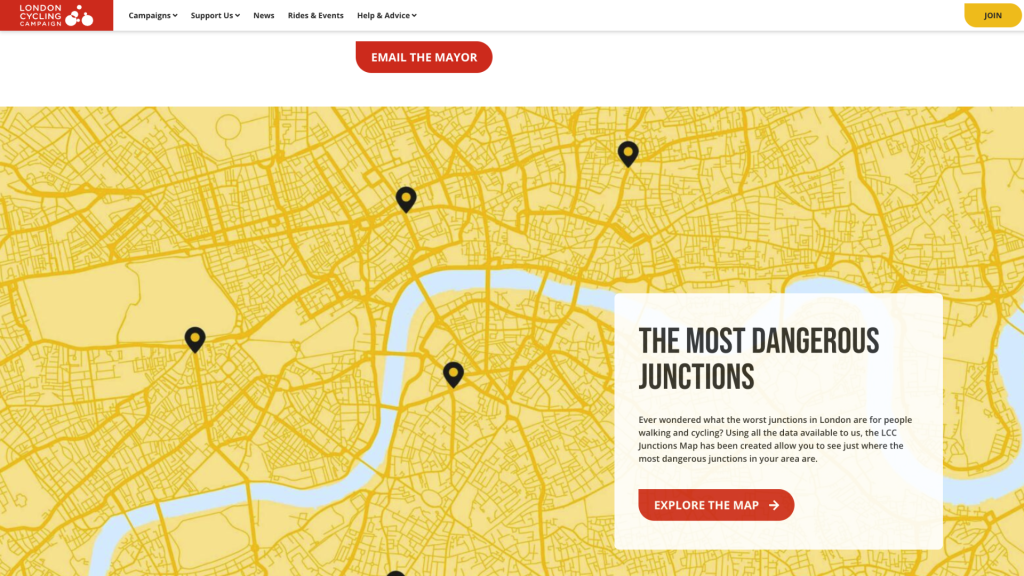
Contact your local councillor about cycling safety concerns. The London Cycling Campaign maintains a map of dangerous junctions across London and campaigns for protected cycle lanes and low traffic neighbourhoods to reduce rat-running.