Before London Rowing Club could begin its highly visible balcony renovation, the club faced a challenge hidden beneath the Victorian embankment: 10 metres of unstable ground that engineers described as resembling sludge.
The solution involved injecting more than 400kg of expanding geopolymer resin to strengthen the foundations ahead of demolition work that began in December. The ground stabilisation, completed in October by specialist firm Geobear, allowed the club to proceed with replacing its deteriorating 104-year-old balcony while keeping costs down and rowing activity disruption to a minimum.
“We had a soil survey carried out which went down to about 10 metres and it found that this is what’s called made ground, and it was a bit like sludge,” Peter Halford, a director at London Rowing Club, explained in a video interview published late last year. “We had two options. One was piling and the other was Geobear. The piling option was more expensive.”
The Putney Embankment was created in the late 19th century through land reclamation, using a mixture of soil, rubble and construction waste to raise the riverbank above high-tide levels. While typical of Victorian engineering, these made-ground soils are prone to long-term settlement, particularly where fill was poorly compacted.
The new balcony required five column supports compared to the original three, prompting structural engineers to recommend foundation strengthening before construction could begin. The expanding resin works by compacting surrounding soils as it expands, increasing their load-bearing capacity without excavation or heavy machinery. For a members’ club where costs are funded entirely by members, the savings were significant.
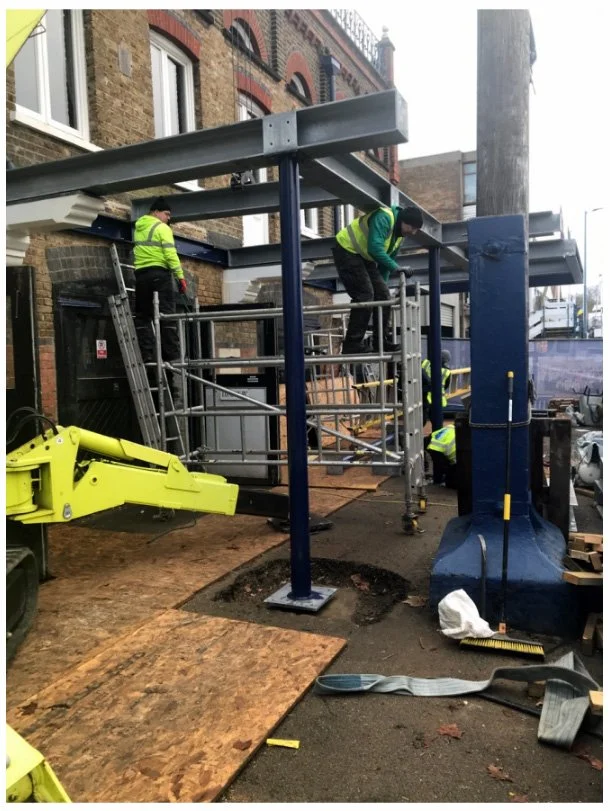
Steel framework rises
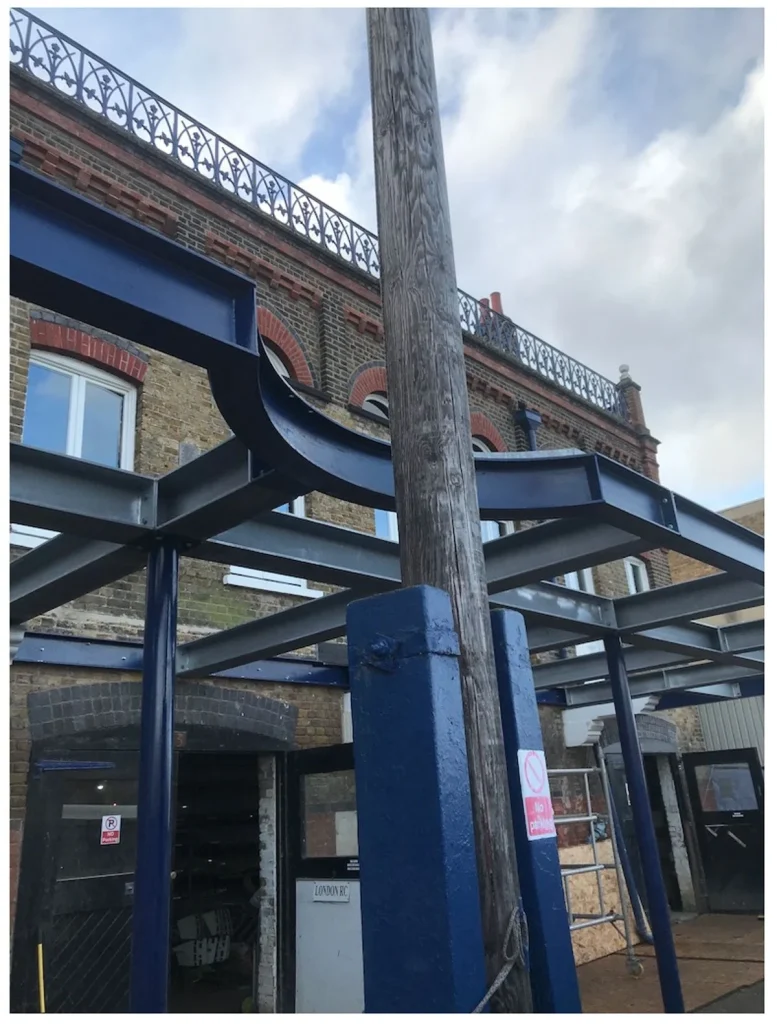
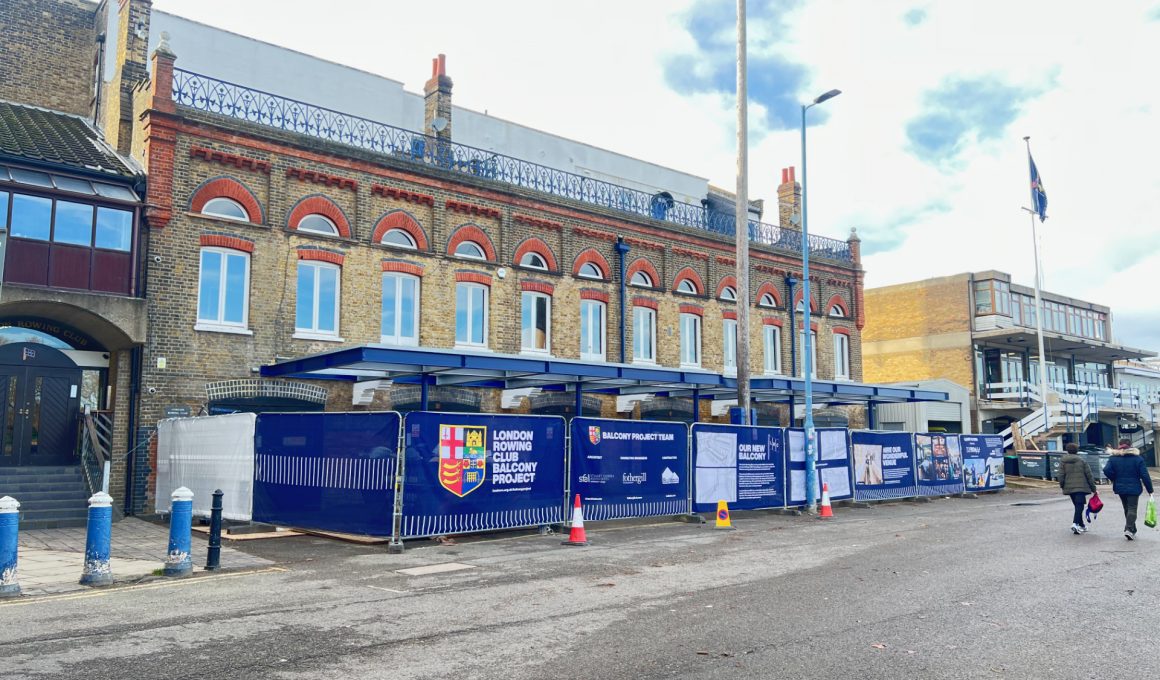
Demolition of the 1921 concrete balcony began last month, with the steel framework for its replacement now taking shape. Photos from this month on the club’s continually updated blog show the new structure’s five support columns and horizontal beams installed, revealing the scale of the expanded balcony.
The design reflects the style of the club’s first Victorian balcony, featuring period-appropriate detailing and a hardwood timber handrail that will match the Embankment’s riverside railings. The original stone corbels, which have supported successive balconies since the building was constructed in 1871, have been retained and restored as part of the new structure.
A second phase will add a canopy along the length of the balcony, meeting the building’s facade below its distinctive arched windows so these Victorian architectural features remain visible from the river. The project has a planned completion date of the end of February.
We previously reported that Wandsworth’s Conservation and Heritage Advisory Committee backed the scheme in July, praising its attention to heritage detail and sensitive contribution to the conservation area. The club’s Great London Row fundraising event in September raised more than £39,000 towards the project.
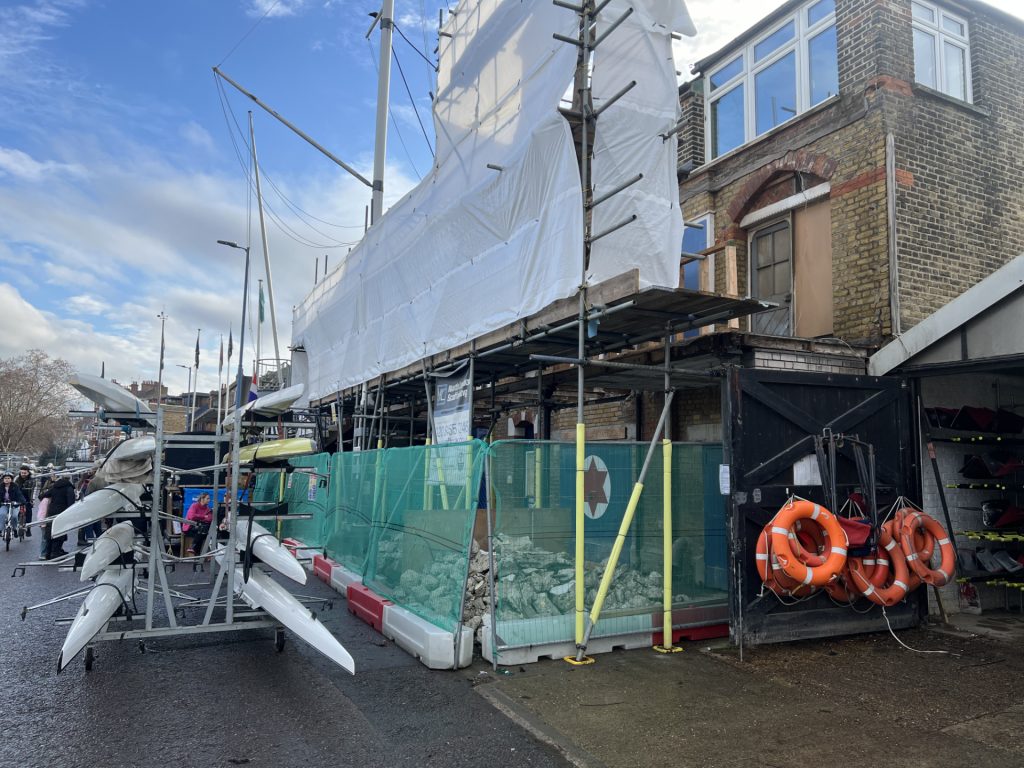
Ranelagh follows suit
The London Rowing Club is not alone in refreshing its riverside frontage. Ranelagh Sailing Club, founded in 1889 and located a few doors along the embankment, received planning permission on January 6 to remove its deteriorating 1960s first floor extension and restore the building’s Victorian facade.
According to the club’s heritage statement submitted with its application, the extension contains asbestos panels that are “starting to become detached and pose a threat to the health and safety of the club”. Removing the full-width structure will expose the building’s original mid-Victorian polychromatic brickwork, currently hidden behind the later addition.
The Ranelagh application attracted nine public comments, all supportive. Westminster School Boat Club, the direct neighbour, said the design “will be an obvious benefit to the Putney riverside frontage”.
The Putney Society backed both restoration projects. Andrew Catto, the society’s buildings panel convenor, described the embankment boathouses as “a unique and living part of local history” deserving conservation as a group. He had praised the London Rowing Club scheme in similar terms when it went before the conservation committee in July.
One resident, Des Howard, welcomed what he called “the trend towards undoing the damage done by planning approvals in the 70’s”, adding that he hoped to see similar restoration work on Putney High Street and Upper Richmond Road.
The Ranelagh scheme also includes a new balcony area at first floor level, restoration of original windows and doors, new railings, and a retractable awning at second floor level.
One thing’s for sure: as we endure the most miserable part of the year, Putney residents will have plenty to look forward to on the embankment as spring pops up its head and rowers look down on the Thames.