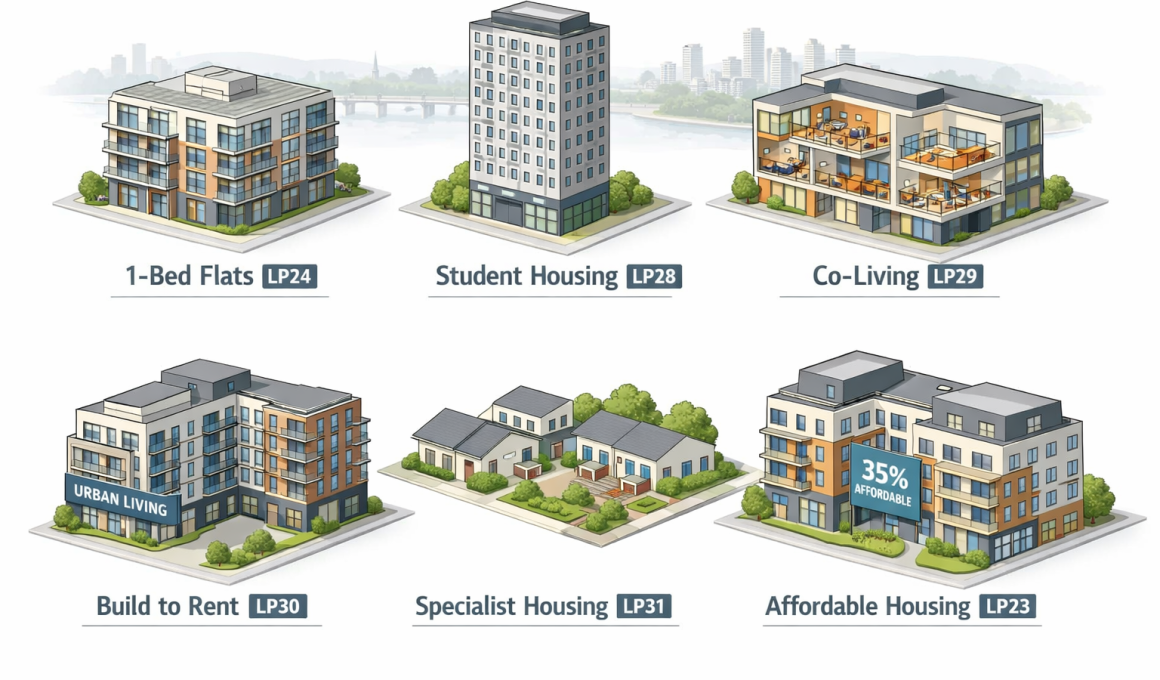
LONG READ. As promised: The detailed breakdown of every housing type affected by the Local Plan examination
Last week, we reported that Wandsworth lost its battle to get cheaper homes on the market by increasing the number of “affordable housing” units in new builds from 35 to 45%. Planning Inspector Graham Wyatt sided with the Greater London Authority and ordered the council back to London’s standard 35% threshold.
That was just the headline. Over three days in November, the examination scrutinised six different housing policies that each cover a different type of home for people and which will shape what gets built in Wandsworth for years to come.
The council wanted tougher rules on developers. The GLA wanted London-wide consistency. Developers wanted easier requirements. The Inspector’s modifications show who won each battle.
This is what changed, what it means, and how it affects you.
The six policies examined:
| Policy | What It Covers | Main Change |
|---|---|---|
| LP23 | Affordable housing quotas | Threshold cut from 45% to 35% |
| LP24 | Housing mix (flat sizes) | More 1-beds prioritised despite falling demand |
| LP28 | Student accommodation | Easier to approve (weakened test) |
| LP29 | Co-living schemes | Stayed tough (50% affordable required) |
| LP30 | Build to Rent | Strengthened (must provide social rent) |
| LP31 | Specialist housing | Limited changes (viability issues remain) |
Article contents
The questions nobody asked
The examination was comprehensive, featured dozens of documents, thousands of pages, and was a housing nerd’s dream – but it left several fundamental questions unanswered. Questions that reveal more about Wandsworth’s housing crisis than the policies themselves.
What happens to the £60,000-£90,000 income band?
Think about who lives in London, and in Putney and Battersea in particular.
If you are a teacher with 5-10 years experience, an NHS professional, junior civil servant, tech worker outside the senior roles, young solicitor or accountant and so on, you will be earning between £60-90,000 a year.
You should be able to get on the housing ladder: buy a small place, eventually get a bigger place, possibly get married and have kids – the usual cycle of life that typically requires more space over time before eventually downsizing in retirement. Not any more.
This crucial bracket of professionals is caught between stools: earning too much to be eligible for social housing where the state assists but too little for Shared Ownership – which used to be the path for home ownership before wages stagnated while the cost of houses soared.
Housing policies for 2026 and beyond now admit that in Wandsworth, Shared Ownership just doesn’t work any more. But, crucially, no alternative has been proposed either.
The affordability trap:
| Your Household Income | What You Can Access |
|---|---|
| Under £60,000 | Social rent (11,000-household waiting list) |
| £60,000-£90,000 | Nothing – you’re locked out |
| Over £90,000 | Shared Ownership (still takes 40% of income) |
| £120,000+ | Shared Ownership 3-beds |
So where are all these people supposed to live?
The modifications proposed by the official inspector include blunt language: “Shared Ownership is unaffordable to a majority of local residents with affordable housing needs.” In other words, the “affordable” housing product marketed to young professionals is worthless.
The numbers behind this admission are brutal. Shared Ownership where you own part of your home instead of all of it now requires household income over £90,000. Here’s what it actually costs for a typical 1-bed flat:
| Cost Component | Amount |
|---|---|
| Property value (1-bed) | £260,000 |
| Your 25% share | £65,000 |
| Deposit required | £3,250-£6,500 (5-10% of share) |
| Monthly mortgage payment | ~£340-360 |
| Monthly rent (2.75% of unsold share) | ~£447 |
| Monthly service charges | ~£150-400 |
| Total monthly cost | £937-1,207 |
| Responsibility for repairs | 100% of property |
| Maximum % of household income | 40% (GLA affordability rule) |
Even at the lower end (£937/month), you need substantial income. At the higher end with service charges in new builds, you’re approaching £1,200+/month while owning only 25% of the property. It just doesn’t work.
How do young families afford 3-bed homes?
The affordable housing being built is overwhelmingly 1-beds and 2-beds. The policy says 25-35% of affordable housing should be 3-beds, but in practice there are lengthy waiting lists and they prioritise larger families in acute need.
Meanwhile, Shared Ownership 3-beds require household income over £120,000, and market rate 3-beds cost upwards of £600,000. So if you’re a couple earning £70,000-80,000 combined with one child and another on the way, what’s your option? The policies don’t answer this either.
There has been a lot of talk in recent years about the “Bank of Mum and Dad” where young people buying a home receive a large sum from their parents as a deposit because it’s simply too hard to save up enough to take that step themselves. The housing deep dive that Wandsworth went through last month reveals that this is no longer a leg-up; it’s the only way up. House prices are simply too high, and wages simply too low.
Is “affordable housing” the right term?
The modifications now include language admitting Shared Ownership is “unaffordable to a majority of local residents with affordable housing needs.”
What “affordable housing” actually means:
| Housing Type | Income Required | Deposit | Monthly Cost | Reality Check |
|---|---|---|---|---|
| Social rent | Eligible for housing list | £0 | £650-900 | 11,000-household waiting list, years-long wait |
| London Living Rent | £60,000-67,000 cap | £0 | £1,341 (room) | Very limited supply |
| Shared Ownership | £90,000+ | £3,250-6,500 | £940-1,200+ | “Unaffordable to majority” – deposit + repairs |
If “affordable housing” is unaffordable to most local residents with affordable housing needs, is the term itself misleading?
What’s the exit strategy from the treadmill?
Wandsworth’s own projections show single-person households aged 25-34 falling by 3,490 by 2038. The council’s Housing Background Paper shows that 16% of people leaving Wandsworth cite unaffordable housing costs, with the sharpest declines in the 25-29 age group.
The council knows young people are being priced out. The council knows the housing ladder is broken. But the solution appears to be building more 1-bed flats to attract more young people who will then be priced out again as soon as they need more space.
Where’s the policy that breaks this cycle?
The affordable housing defeat: From 45% to 35%
Wandsworth wanted a 45% affordable housing threshold. That means that if a developer promises that nearly half of the homes they build are designed to be more affordable than the going market rate, they get fast-track approval, and so avoid lengthy viability assessments.
That’s no joke for a developer who can spend years in red tape trying to get a building approved, spending countless hours and huge resources on paperwork rather than putting concrete in the ground and bringing in revenue.
Wandsworth council provided viability evidence for dozens of sites that it said proved developers could hit this 45% requirement and still make money. The GLA disagreed. In written statements, London’s planning authority warned the evidence was “not robust” and a threshold too high would “disincentivise applicants” from fast-track routes. Their argument: if developers can’t meet 45%, they’ll submit viability assessments claiming they can only afford 30%, 25%, or less. The result would be lower overall affordable housing delivery, not higher.
Inspector Wyatt sided with the GLA and said the threshold should be cut to 35% to match the London-wide standard. The 70/30 split between social rent and intermediate housing stayed in place. In simple terms: Wandsworth cannot demand more than neighbouring boroughs.
What actually changed in the policy text
The Schedule of Proposed Modifications [pdf] makes technical adjustments beyond the headline threshold reduction.
Two changes help developers. Small amendments to approved plans won’t trigger new affordability checks so the business of building is slightly less onerous. And if developers can prove they can’t afford 35% affordable housing, the council won’t automatically say no, so there is a chance it will get through.
The biggest change is explicit language confirming Shared Ownership is “unaffordable to a majority of local residents” and will only be accepted if it helps deliver more social rented housing.
The demographic time bomb: Building homes for people who are leaving

Two policies reveal an uncomfortable truth about Wandsworth’s housing strategy. Policy LP24 sets rules for what sizes of homes get built in each development, while Policy LP31 covers specialist housing for older people and vulnerable groups. Read together, they show a borough building for the wrong demographic.
Wandsworth wants more 1-bed flats built. Here’s what the policy requires versus what demographic analysis shows people actually need:
Market Housing: Policy vs. Actual Need
| Unit Size | Policy Requires | Actual Demographic Need | Gap |
|---|---|---|---|
| 1-bed | 20-30% | 6% | 3-5× more than needed |
| 2-bed | 30-40% | 38% | Roughly aligned |
| 3-bed | 15-25% | 46% | Half what’s needed |
| 4-bed | 5-10% | 9% | Roughly aligned |
Affordable Housing: Policy vs. Actual Need
| Unit Size | Policy Requires | Actual Demographic Need | Gap |
|---|---|---|---|
| 1-bed | 30-40% | 20% | 50-100% more than needed |
| 2-bed | 30-40% | 36% | Roughly aligned |
| 3-bed | 25-35% | 31% | Roughly aligned |
| 4-bed | 10-15% | 13% | Roughly aligned |
The biggest mismatch is glaring: developers are required to build 3-5 times more 1-bed market housing than actual demographic need shows, while the policy caps 3-bed family homes at half what’s actually needed (15-25% versus 46% need).
The council knows this. In their Housing Background Paper, they admit: “The modelled need for one-bed market housing is particularly low within the new HNA; the Council have not sought to reflect this entirely as this would result in a policy which is significantly removed from the proportion of one-beds previously delivered within the Borough.”
Translation: We know we’re building the wrong homes, but we’re doing it anyway because that’s what the market delivers.
Source: Housing Background Paper (SD013), Table 13 (page 49) for demographic need analysis; Table 14 (page 50) for policy requirements comparison.
Here’s the truth the council won’t discuss directly. They’re pushing 1-beds because young people are being priced out and leaving. Building more small flats attracts more young people. But it glosses over the fact that those same people can’t afford families because there aren’t enough larger homes, so they are priced out and leave again.
It’s no longer a ladder, it’s a treadmill.
This has all kinds of knock-on effects. The Battersea Society called this out in their hearing statement, warning the policy is “driving families out” and causing schools to lose pupils. The data supports this concern.
The exodus in numbers (projected to 2038):
| Age Group | Change | Why It Matters |
|---|---|---|
| 25-34 singles | Fall by 3,490 | Young professionals leaving |
| All single households | Rise by 2,500 | But these are older people |
| 25-29 age group | Sharpest decline | Can’t afford to stay |
| People citing housing costs | 16% leaving | Priced out |
What changed in the modifications
The modifications added flexibility for specialist housing, allowing “specialist forms of housing” to show different housing mix needs from standard ranges. This is a small win for retirement homes that genuinely need different unit sizes. Studio dwelling restrictions stayed in place – the policy still limits studios to “genuinely small schemes of four or fewer dwellings” in the private rented sector, which means developers can’t flood the market with £1,200 monthly corporate “pods.”
The specialist housing policy saw limited changes beyond clarifications about requiring “high quality” development and affordable housing contributions that match overall requirements. What it doesn’t address is how to make specialist housing financially viable while requiring affordable housing contributions. Retirement housing is already expensive to develop with higher accessibility standards, communal facilities, and management costs. Adding 35% affordable housing makes many schemes unviable.
The alternative housing market: Student blocks, co-living, and corporate rentals
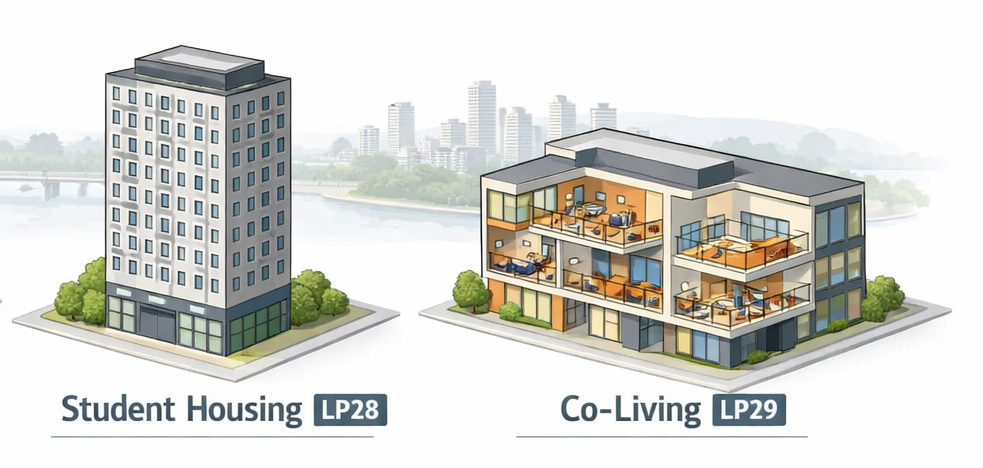
Three policies show how developers sidestep affordable housing requirements. Policy LP28 covers purpose-built student accommodation, Policy LP29 addresses co-living schemes with shared facilities, and Policy LP30 sets rules for Build to Rent developments. Each is an escape route from providing affordable housing.
Student accommodation: The developer workaround
Purpose-built student accommodation has become a developer loophole. Student housing requires no or minimal affordable housing contributions, allows smaller room sizes, permits higher density, and provides guaranteed rental income from universities. The Putney Society warned in their hearing statement that developers pivot to student blocks to “avoid affordable housing requirements”, building student pods instead of homes young professionals could buy or rent affordably.
Wandsworth wanted student developments only approved where sites are “not suitable for conventional housing.” Developers argued this was too restrictive. Inspector Wyatt sided with developers and changed the test to “would not compromise site’s capacity for conventional housing.” This is a significant weakening that will make student housing easier to approve.
The numbers don’t work for Wandsworth’s actual need. This isn’t a university borough like Camden. But developers know student housing is more profitable than conventional housing with 35-45% affordable requirements. What this means: sites that could house 100 conventional flats with 35 affordable units now house 200 students with no affordable housing, with rooms rented at £250-350 weekly or £1,000-1,400 monthly.
The policy kept requirements for 35% “affordable student housing” at 50% of available maintenance loan, financial contributions to conventional affordable housing, and evidence of genuine student need. But the weakened approval test means more sites will likely become student blocks.
Co-living: Corporate flat-sharing
Large-scale corporate flat-sharing schemes market themselves as “co-living” or “urban living” to young professionals. In planning terms, they’re called “Large-Scale Purpose-Built Shared Living.” The concept: you rent a bedroom and share a kitchen with 10-20+ people you don’t know. Developers can build smaller units at higher density while avoiding conventional housing standards.
Wandsworth’s policy requires these schemes to provide 50% affordable housing contribution, which is significantly tougher than the 35% for conventional housing. Inspector Wyatt strengthened this policy, rejecting developer arguments that co-living deserves easier treatment. The requirement that schemes must prove they won’t compromise the site’s capacity for conventional housing stayed in place, along with strict quality standards.
The reality is that these aren’t “communities” but corporate rental operations where you pay £1,200-1,500 monthly for a bedroom of 12-15 square metres plus shared kitchen with 10-20+ strangers and “communal” lounge. You get no security of tenure and no path to ownership. They’re expensive corporate hostel living with profit margins for developers who avoid conventional housing standards – essentially gentrified HMOs.
Nothing changed substantially in the modifications since the policy stayed tough, requiring 50% affordable contribution. But given that practically zero affordable co-living exists anywhere in London, the real impact is minimal. Every site that becomes co-living is a site that could have been conventional housing, including affordable housing that might help people onto the property ladder.
Build to Rent: The Inspector’s surprise strengthening
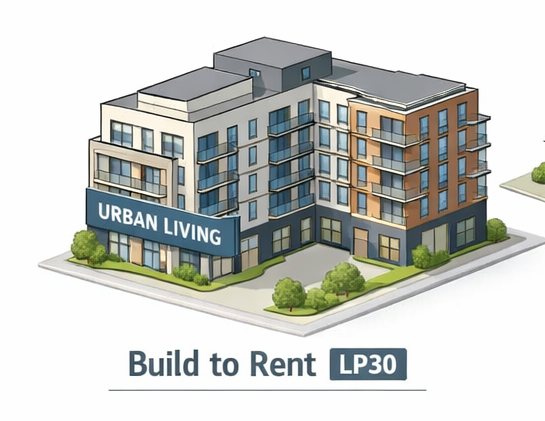
Build to Rent developments are large schemes, usually 50+ units, that are built to be rented long-term rather than sold. Think big apartment buildings with professional management like you’d see in American cities, typically owned by institutional investors like pension funds seeking stable long-term returns.
Wandsworth wanted Build to Rent schemes to provide affordable housing, with the “affordable” component as “low cost rented” housing. Inspector Wyatt actually strengthened the language, changing “low cost rented” to explicitly require “social rented” housing for 70% of the affordable element. This is tougher than what Wandsworth proposed. Social rent is genuinely affordable at roughly 50-60% of market rent, whereas “low cost rent” is vaguer and easier to manipulate.
The policy now requires Build to Rent schemes to provide 35% affordable housing like conventional developments, with 70% of that as social rent and 30% as London Living Rent or similar intermediate product. They also need to provide longer tenancies and maintain professional management standards.
Build to Rent could provide decent rental housing with proper security. For young renters who’ve accepted they’re renting long-term, this offers better quality with longer security than typical 6-12 month tenancies. Professional management means repairs actually get done. But you’re still renting and building someone else’s asset, not your own equity.
For young people hoping to buy eventually, every Build to Rent scheme is housing stock that stays in the rental market forever. The 30% “intermediate” component might be London Living Rent at £1,341 monthly for a room, which is more affordable than market rent but still prevents saving for deposits elsewhere.
For the locked-out middle, the social rent component at roughly 24% of total development provides genuinely affordable housing. For people on £40,000-50,000 incomes, this might be more accessible than Shared Ownership.
What happens next
The Inspector’s modifications are now out for public consultation until 11:59pm on January 14, 2026. This consultation is strictly about the Inspector’s modifications, not other aspects that were already debated. You can’t reopen arguments that were already made in November.
You can submit comments by emailing wandsworthplanningpolicy@richmondandwandsworth.gov.uk or posting to Spatial Planning and Design, Wandsworth Town Hall, Wandsworth High Street, SW18 2PU. Responses must include your name and contact details since anonymous responses won’t be accepted.
After considering responses, Inspector Wyatt will issue his final report in early 2026. The council can then adopt the plan with modifications, which is most likely, or reject it entirely. Rejecting it would be pointless since that would leave the current 35% threshold in place anyway.
The political fallout
Local elections are in May 2026, which means this examination provides plenty of ammunition for all sides. Opposition parties can argue that Labour’s ambitious plan failed and young people are still being priced out. Labour can counter that they fought for higher affordable housing but the GLA blocked them, and they secured tougher language on Shared Ownership and Build to Rent.
The 20% emergency measure complication
Implementation of these policies is complicated by a significant development that happened just before the examination. On October 23-24, 2025 – less than two weeks before the Wandsworth hearings – Sadiq Khan and Housing Secretary Steve Reed announced emergency measures to tackle London’s housing crisis. The headline: a temporary “fast-track route” requiring only 20% affordable housing instead of 35%.
How this affects Wandsworth’s Local Plan:
The 20% route is optional, not mandatory. Developers now have three choices when submitting planning applications.
They can choose the emergency 20% route, which runs temporarily until March 2028. This gives them quick approval without needing to submit a viability assessment, access to grant funding for affordable housing, and 50% Community Infrastructure Levy relief. But they only need to provide 20% affordable housing.
Alternatively, they can use the standard route with 35% affordable housing – the threshold Wandsworth just got ordered to accept after losing its fight for 45%. This follows the normal planning process with no special benefits. This is what the entire examination fought over.
Or they can submit a viability assessment, making a financial case that their scheme can’t afford 35% affordable housing. This lets them negotiate an even lower percentage, though it’s a time-consuming process that delays approval.
What this means in practice:
Wandsworth fought for months to get 45% affordable housing, lost, and was ordered back to 35%. Meanwhile, the Mayor introduced a route that lets developers choose 20% instead – undermining even the 35% threshold the council was forced to accept.
The examination still matters because it sets the long-term framework (post-March 2028) and establishes Wandsworth’s baseline requirements once the emergency measure expires. But for the next 2-3 years, developers can sidestep Wandsworth’s 35% requirement entirely by choosing the emergency route.
Aydin Dikerdem, Wandsworth’s Cabinet Member for Housing, called the 20% measure “a huge blow to social housing delivery in London” when it was announced. His council had just spent months preparing evidence that Wandsworth could viably demand 45%.
The political irony: The council was fighting for higher affordable housing requirements while the government and Mayor were simultaneously creating an escape route to lower them.
The honest summary
This examination clarified what gets built in Wandsworth over the next decade. More 1-bed and 2-bed flats, more student housing, more Build to Rent developments, more housing staying in the rental market. Less family-sized homes, less affordable housing for the £60,000-90,000 income band, less housing you can buy in your 20s or 30s. Same amount of political arguments, young people being priced out, developers finding loopholes, and waiting lists.
The Inspector’s modifications are technically sound and London Plan-compliant. They create a viable, deliverable framework for housing development. They just don’t solve the actual problem.
Key takeaways by age group

If you’re 25-35 and renting: there will be less affordable housing built overall (35% threshold instead of 45%). Shared Ownership has been officially admitted as unaffordable to most people. Student housing and co-living developments might increase, taking sites that could have been used for conventional housing. Build to Rent might provide better rental conditions but offers no ownership path. In all likelihood, you’re going to stay on the treadmill: arrive young, get priced out when you want to start a family, and then leave.

If you’re 28-40 with kids: fewer 3-bed and 4-bed homes will be built in the years ahead. Affordable family-sized housing already has years-long waiting lists. If you need to upsize, you’ll be competing with people who bought years ago with parental help. Specialist housing for older relatives remains expensive and limited.

If you’re 45+ and established: not much changes for you directly. Downsizing options remain limited and expensive. But your kids and grandkids face a housing market you wouldn’t recognise.

If you’re in the £60,000-90,000 income band: you were the target of this entire fight. The council wanted to force developers to build more intermediate housing specifically for you. The Inspector said no. Shared Ownership is officially unaffordable to you. No alternative was proposed. In simple terms: you’re on your own.
This decision reflects a fundamental tension in London planning about whether boroughs with higher property values should demand more affordable housing from developers or whether London-wide consistency matters more. The GLA’s Threshold Approach has proven effective since 2021, with 84% of strategic applications now providing at least 35% affordable housing, up from 53% in 2018. The Inspector concluded that consistency matters more than Wandsworth’s higher ambitions.
The rejection comes as the council faces broader challenges with its housing strategy. Analysis last month found that Wandsworth had committed to 28% fewer homes than its London Plan target, despite celebrating the plan as “ambitious.” And an investigation into developer contributions revealed that the council’s insistence on high affordable housing requirements may actually be driving developers away from the borough entirely.
For young people trying to buy their first home in Wandsworth, the housing ladder, already steep, just got steeper.
All examination documents including the Inspector’s Schedule of Proposed Main Modifications, council responses to Matters 1-7, and hearing statements from the GLA, Putney Society, and Battersea Society are available at the Wandsworth Local Plan Partial Review Examination Library.
For questions or corrections, email news@putney.news.