

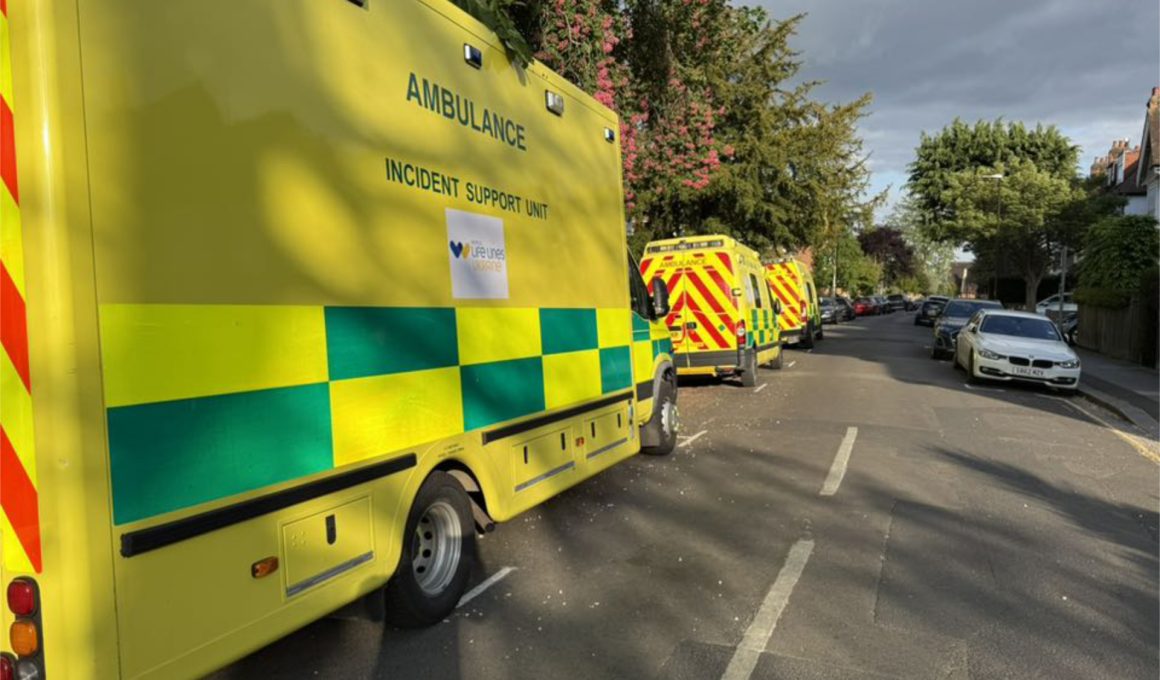
The alarm will sound at 4.30am this Sunday for Jonathan Callaway, but the Putney resident won’t be heading to an early morning flight or weekend getaway. Instead, he’ll be embarking on his second volunteer mission to drive a fully equipped ambulance across Europe to war-torn Ukraine.
As he puts the finishing touches on his preparations this week, Callaway is reflecting on a journey that goes far beyond the physical miles ahead. “This week is all about preparation,” he explains, describing the meticulous process of filling “every corner of every one of the five ambulances” that will make up this latest Medical Life Lines Ukraine (MLLU) convoy.
The practical preparations paint a vivid picture of a mission that’s equal parts humanitarian aid and endurance challenge. Alongside the obvious essentials — passports, driving licenses, personal medicines, phone chargers — the volunteers are advised to pack toilet rolls, as “roadside facilities tend to become ever more basic the further east you travel.”
A digital Ukraine, a dangerous reality
Callaway describes a Ukraine that might surprise many back home. “Ukraine is very digital nowadays, with WiFi widely available and most cafes and shops happy to take card payments.” Yet this modern connectivity exists alongside the harsh realities of war. The convoy expects their one night in Lviv to be “interrupted by air raid sirens: the Russians prefer to send their drones and missiles over at night.”
The early Sunday departure serves a practical purpose beyond Callaway’s circadian rhythms. The Eurotunnel, which transports the ambulances for free, is “least busy early on Sundays so we can minimise delays crossing the Channel.” Even for a humanitarian convoy, the paperwork to enter the EU is “horrendous,” and the team depends on French customs “not getting too anal about checking not only the vehicles but also their contents, which have to be fully itemised.”
More than medical equipment
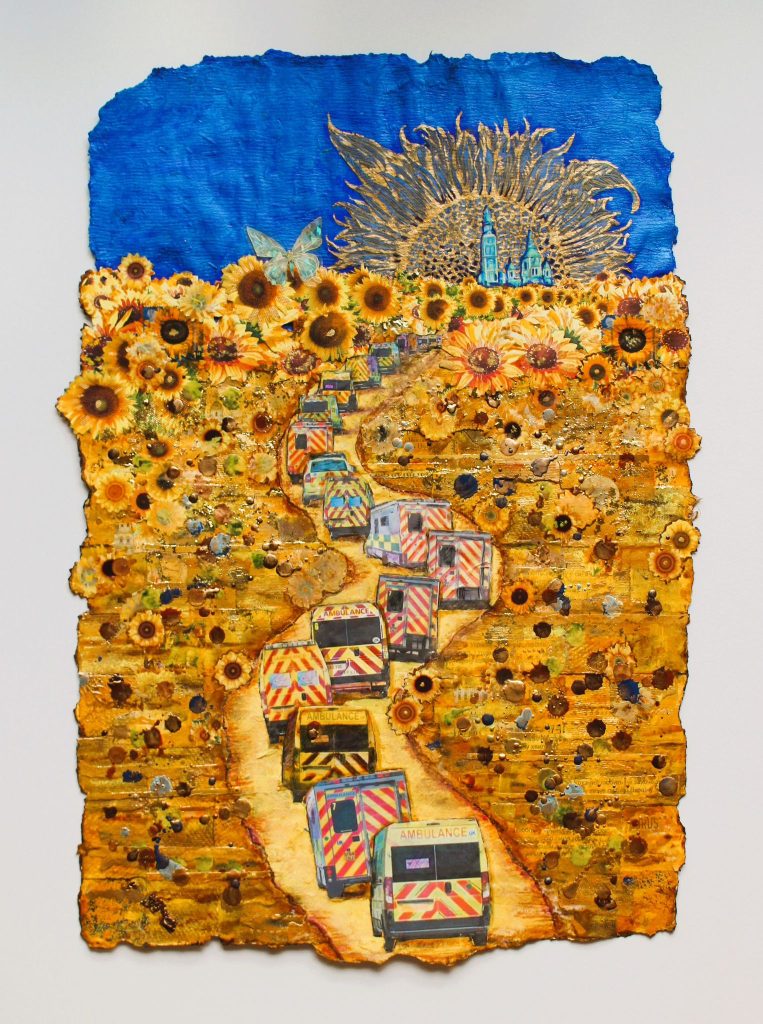
Since 2022, MLLU has delivered over 100 ambulances to Ukraine, alongside 25 generators and one all-terrain rescue crane. Each ambulance costs around £20,000 to buy, refurbish and deliver, but they carry far more than medical equipment. Last winter’s convoy included “heavy winter clothing and blankets for people bombed out of their homes.”
The mission takes on added urgency as winter approaches. Callaway notes that Russia has “intentionally focused its attacks on Ukraine’s power infrastructure and hospitals — both vital to civilian survival in freezing conditions.” Hospitals and medical facilities have become targets in what he describes as Russia’s strategy to “destroy morale in Ukraine and disrupt people’s lives as much as they can.”
Personal sacrifice, collective impact
What will he miss most during his absence? “Home comforts and sheer enjoyment of being lazy if and when I feel like it!” It’s a refreshingly honest admission from someone who, along with his co-driver (an old pal from Exeter University days) has now raised over £19,000 for MLLU.
The gratitude runs deep. Callaway plans to write personally to every donor upon his return on 12 September, “and tell them just how well their money has been used.” It’s a commitment that speaks to the personal connection he feels with supporters who’ve helped make this mission possible.
A message of solidarity
For Callaway, the ambulances represent something profound: “Every ambulance is a message of solidarity. It says: we haven’t forgotten you.” In a conflict where, as he puts it, “the Russians want Ukraine without the Ukrainians,” each vehicle becomes a tangible reminder that the outside world remains aware and engaged.
The news from Ukraine “remains grim, with civilian casualties rising and hospitals and medical facilities under increasing strain,” Callaway acknowledges. Yet he’s driven by a simple conviction: “Everything we do can make a difference, and the ambulances have literally saved lives on numerous occasions.”
As the 4.30am alarm approaches, Callaway admits to feeling “fairly calm right now but as we get nearer then the tension will kick in.” It’s an understandable response for someone about to drive into a war zone, armed with nothing but determination, preparation, and the knowledge that sometimes the most meaningful journeys begin before dawn.
The convoy departs this Sunday, carrying not just medical equipment but the hopes and solidarity of communities like Putney – proof that even in our interconnected world, sometimes the most powerful messages are still delivered by hand, one ambulance at a time.


Congratulations, Jonathan and the other members of Medical Life Lines Ukraine on a great venture. Good luck and safe voyage!
This praiseworthy work to alleviate the effects of war should never have been necessary. It would not have been ne eded had the Ukrainians given the Russian-speaking oblasts the same sort of limited self government the Brits have given Wales and Scotland. It would not have been necessary if the Russian majority oblasts had not been shelled for eight long agonising years. And, most of all, the continuation of fighting would not have been necessary had Ukraine gone ahead with the Turkey peace plans in 2022 which they had already pencilled in ready for signing. But, under ultra right-wing pressure, Zelensky listened to the American-prompted voice of Boris Johnsn and instead of peace he chose war, dislocation and death for his countrymen. This is a tragedy to which someone like me cannot do justice. That would take a Shakespeare or a Sophocles.
Well done. The alleviation of wartime suffering is praiseworthy. But the war could have dndef in ,March/April 2022 along with suffering, destruction and death on both sides, had Zelensky not scuppered the agreement in Turkey that had already been pencilled in. it is not a simple story and we must recognise that Putin attacked after 8 years of shelling of the majority Russian majority -speaking oblasts and the deliberate non.fulfilment of the Minsk accords.