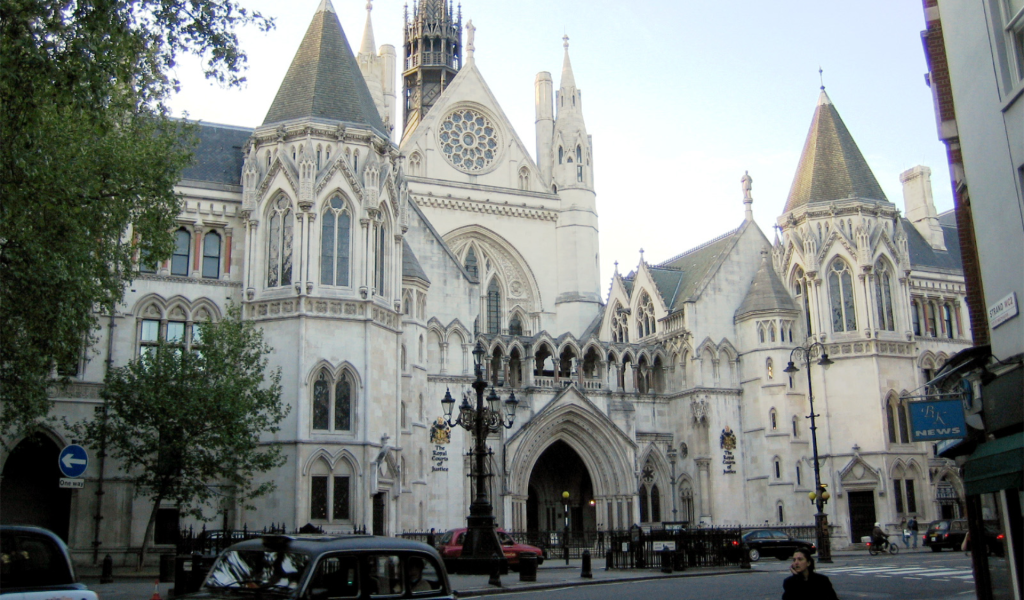
One of Britain’s most prestigious sporting institutions will face residents in the Royal Courts of Justice this week in a legal battle that could reshape green space protection across London and determine the future of 73 acres of former public parkland.
The Wimbledon Park court case begins on Friday 16 January and is expected to last up to six days, with the All England Lawn Tennis Club (AELTC) defending its £200 million expansion plans against Save Wimbledon Park’s claim that the land remains protected by an AELTC statutory trust for public recreation.
The stakes could not be higher. The AELTC has already conceded that if the statutory trust is found to exist, its proposed development of 39 grass courts and an 8,000-seat stadium “cannot proceed.”
The case carries national significance for green space protection, with campaigners arguing it will determine whether councils can sell protected public land without proper consultation and whether private development can override longstanding legal safeguards.
The dramatic testimony
In a key element of the hearing, the AELTC will call Chris Gorringe, who was the club’s chief executive at the time of its 1993 purchase of the land from Merton Council, to give evidence about what the club knew about the statutory trust.
The tennis club will argue it was unaware of the trust’s existence when it bought the freehold and therefore should not be bound by it.
Save Wimbledon Park disputes this, pointing to documents they say were available to the AELTC at the time and arguing that the 2023 Supreme Court decision in Day v Shropshire supports their position that ignorance does not exempt purchasers from statutory trust obligations.

What the court must decide
The case turns on complex statutory interpretation dating back to 1915, when Wimbledon Corporation acquired the Wimbledon Park Estate under the Wimbledon Corporation Act 1914.
Save Wimbledon Park argues that the land has been protected for public recreation since 1915, when Wimbledon Corporation first bought it. When London’s local government was reorganised in the 1960s, that protection was supposed to continue.
The key issue is what happened in 1993. When Merton Council sold the land to AELTC, it was legally required to advertise the sale and give the public a chance to object. It failed to do so.
Save Wimbledon Park says that because the council skipped those steps, the public protection never went away. The land should still be reserved for public recreation today.
The AELTC argues the opposite: the golf course was run by a private members’ club for over a century, with little public access, so it was never truly public land in the first place.
A 2023 Supreme Court ruling backs up Save Wimbledon Park’s argument. In Day v Shropshire, judges decided that when councils sell protected land without following the proper consultation process, the public’s rights survive the sale.

Timeline and next steps
A written judgment is expected within two to three months of the hearing’s conclusion.
This case is one of three parallel legal challenges Save Wimbledon Park is pursuing, what the campaign calls “triple jeopardy” for the AELTC’s development plans.
The Court of Appeal has already granted permission for residents to challenge the planning permission itself, saying their grounds had “a real prospect of success.” A third challenge involves restrictive covenants from the 1993 sale that prohibited development on the land.
The statutory trust case follows controversy last year when an attempt was made in the House of Lords to retrospectively change the law to remove the statutory trust, which would have made this case irrelevant. The amendment was withdrawn after cross-party opposition.
Save Wimbledon Park is calling supporters to attend the opening day on Friday to demonstrate public backing for their case, hoping to attract media attention to what they characterise as a “David and Goliath struggle” over land that should remain protected for the community.
The case represents the latest chapter in a four-year battle over the former public parkland, which AELTC purchased in 2018 for £65 million as part of its long-term expansion plans for the Wimbledon Championships.
The case is supported by every local and surrounding residents’ association, as well as numerous London and national environmental bodies, who see it as setting a crucial precedent for the protection of public open spaces.