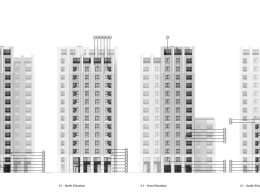
Rockwell has lodged a planning appeal against Wandsworth Council’s unanimous rejection of its 29-storey Glassmill tower next to Battersea Bridge, filing the challenge with just a day to spare before the deadline expired.
The developer’s controversial scheme for 1 Battersea Bridge Road was refused by councillors in April 2025 after planning officers ruled it would cause “significant harm” to the area’s predominantly low-rise character. The refusal followed fierce opposition from residents, celebrity objectors including Sir Mick Jagger and Eric Clapton, and a petition with more than 5,000 signatures.
An eight-day public inquiry will now examine the Glassmill Battersea tower appeal starting 17 March 2026, with heritage societies considering applying for Rule Six status to formally cross-examine the developer’s witnesses.
At Wednesday’s Conservation and Heritage Advisory Committee meeting, chair Michael Judd confirmed societies including the Battersea Society and Chelsea Society are weighing whether to seek the enhanced legal standing, which would allow them to question expert witnesses under oath through barristers.
Judd said CHAC itself would not participate collectively in the appeal, noting the committee is “partly a creature of the council” despite his role as independent chair. Individual societies must now decide whether to apply for Rule Six status separately or jointly by 27 January.
The developer’s case dismissed
The appeal comes despite what planning officers described as a “grossly unacceptable” proposal for a site in a policy zone where only six storeys or 18 metres is considered appropriate. Rockwell originally proposed a 39-storey tower before reducing it to 29 storeys.
In its statement of case to the Planning Inspectorate, Rockwell argues that bridges along the Thames are “often signposted by tall to very tall developments” and that the scheme represents “the optimisation of an underutilised building and brownfield site”.
The developer’s documents admit the tower would cause heritage harm “at the very low end of less than substantial harm” to nearby conservation areas and listed buildings. The council assessed the harm as occurring “at the lower to middle level of less than substantial harm”. The planning inspector will need to decide which assessment is correct.
The scheme would replace the six-storey Glassmill office building with 110 flats, including 54 affordable homes at social rent, workspace for small businesses, a restaurant and a community hub. Three charities have expressed interest in the proposed community space.
Rockwell has placed a £1.75 million deposit on the £45 million site purchase, payable only if planning permission is granted. The existing building is only seven per cent leased commercially.

What Rule Six status means
Rule Six parties gain the right to cross-examine witnesses at the public inquiry through legal counsel, testing the evidence presented by both the developer and the council. Without this status, societies can still make statements to the inspector but cannot question expert witnesses.
As one CHAC officer explained at Wednesday’s meeting, Rule Six status opens participants up to cross-examination themselves, requiring them to present a single representative who can be questioned by the developer’s barrister. The status allows societies to scrutinise the appellant’s proof of evidence and expert testimony.
One committee member questioned whether there was merit in societies applying for Rule Six status collectively rather than individually. Another raised concerns about “wasting the inspector’s time” by duplicating objections, though they acknowledged societies want to ensure their concerns are properly heard.
The tight timetable creates challenges. The council’s statement of case is due next week, with proofs of evidence from all parties required by mid-February. The Planning Inspectorate sets these deadlines, not the council or appellant.
Opposition remains united
Council Leader Simon Hogg opposed the original scheme, stating that “a structure of this magnitude on this site would inflict more harm than good on the local area and its residents”. Labour councillors Jessica Lee and Jamie Colclough told residents that “schemes like this that ignore the local character and put profit ahead of improvements to the local area and people’s wellbeing just aren’t welcome here in Battersea”.
The application drew 2,028 objections alongside 1,892 letters of support, though objectors raised concerns about support letters following identical templates and being uploaded in batches.
Opposition came from Historic England, the Chelsea Society, the Battersea Society, the Putney Society and the Royal Borough of Kensington and Chelsea. Local MP Marsha de Cordova also spoke out against the scheme.
Local campaigner Rob McGibbon, whose petition helped galvanise opposition, said after the council’s decision: “I hope that the company now scraps the scheme altogether and that they do not appeal.”
The Greater London Authority allowed Wandsworth’s refusal to stand in May 2025, ruling there were not “sound planning reasons for the Mayor to intervene”.
A case management conference will be held on 26 January 2026 to prepare for the March inquiry. Residents wishing to comment on the appeal can do so via the Planning Inspectorate website, quoting appeal reference 6002127. The deadline for submissions is 20 January 2026.
Full details are available on Wandsworth Council’s planning portal under reference 2024/1322.