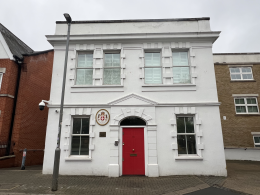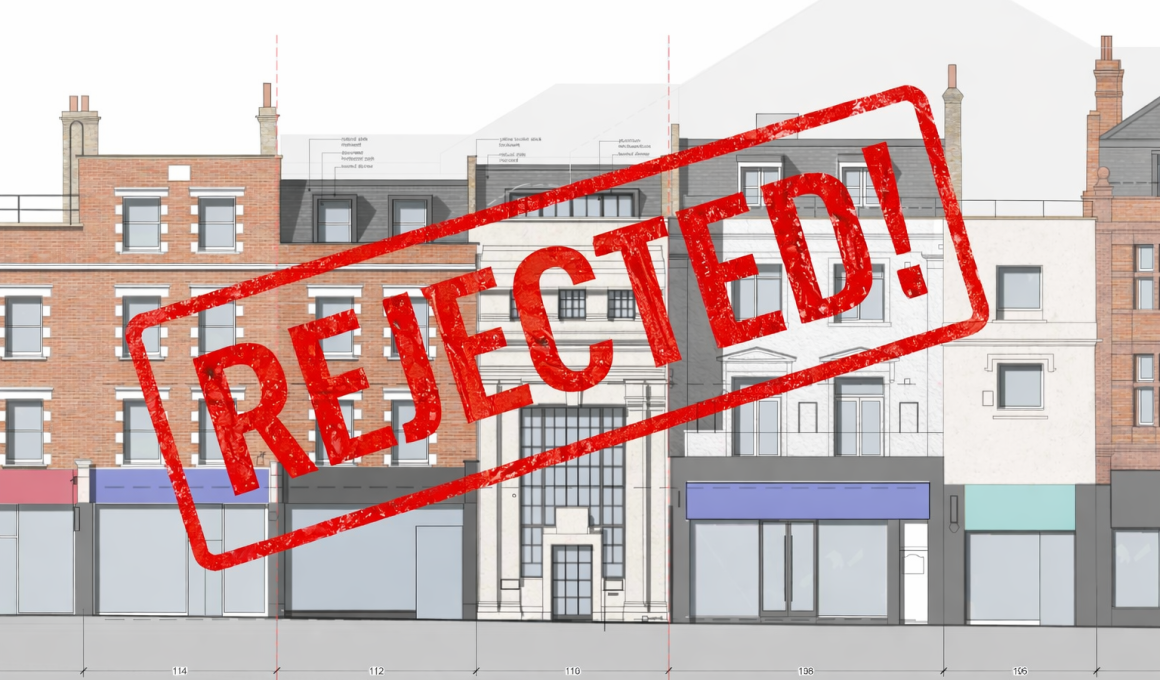
Wandsworth Council has refused plans to convert the empty Lloyds Bank building on Putney High Street into eight flats, citing “excessive bulk,” severe harm to neighbouring residents, and poor living conditions for future occupants.
The refusal last month puts the locally listed building – empty for 18 months since Lloyds’ closure – back into planning limbo, with the developer now appealing the decision. Residents have until January 16 to submit comments to the Planning Inspectorate.
The case (2025/3306) reveals a stark disconnect between heritage experts who unanimously backed the scheme and planning officers who found it “an overdevelopment of this small constrained site.”
The proposal
Developer proposals would have created eight flats (2 studios, 3 one-bed, 3 two-bed) above retained ground-floor commercial space at 110-112 Putney High Street.
The scheme included mansard roof extensions visible from the street, extensive rear extensions across all floors, multiple terraces, and rooftop plant equipment alongside a communal terrace.
View the full planning application 2025/3306 on Wandsworth’s planning portal
Why officers refused
Planning officer Laura Nieves’s 18-page report [pdf] identified multiple serious failures.
Unacceptable harm to neighbours
The worst impact would fall on residents at neighbouring 108 Putney High Street. Three units would see severe loss of light – including one first-floor window that would “lose all light in winter,” dropping to just a third of its current daylight.
Two other studio windows already struggling with inadequate light would drop further below acceptable standards. One window would lose all direct sunlight – critical for a property already hemmed in by the Putney Exchange shopping centre to the west and north.
Officers wrote: “Given the positioning of the terrace and its close proximity of the Putney Exchange Shopping Centre to the west and north and the lack of outlook to the south, any loss of light within these properties is significant and unwarranted.”
The proposal would also loom over neighbours with boundary walls as high as a three-storey building running the depth of the property along No. 108, and extending well beyond No. 114’s extension to the south. This would create an “extremely obtrusive” impact on bedroom windows and terraces, officers found – resulting in “loss of outlook and an overbearing impact.”

Out of scale with the street
The rear extensions would extend back far deeper than any other approved development in the terrace – roughly four metres beyond what neighbours have been allowed to build.
Recent approvals in the same terrace set back progressively at each floor to reduce bulk. This proposal barely stepped back at all on the lower floors – just under two metres at first and second floor level compared to neighbours’ five to six metre setbacks.
“The proposal sits way beyond anything else within the terrace and on this basis is unacceptable,” officers concluded. The building would appear “top heavy to the rear” and “uncomfortable – the materials, scale, and proportions are entirely different.”
Poor living conditions inside the new flats
Flats at the rear would face the Putney Exchange shopping centre’s blank wall less than three metres away – “offering very limited outlook” and inadequate light, especially for lower floors.
The internal lightwell designed to bring light into flats is narrow and three storeys high, “offering extremely limited light and outlook” while creating privacy and noise problems – bedroom windows would look directly into living spaces across the gap.
Critically, the developer never provided daylight and sunlight assessments for the new units themselves, “despite this being requested at pre-application stage.” Officers couldn’t verify whether future residents would have acceptable living conditions.
Missing noise assessment
Despite significant rooftop plant equipment located right next to the communal terrace and near windows, no noise impact assessment was provided. Officers couldn’t rule out harm to residents from the equipment.
Waste management breakdown
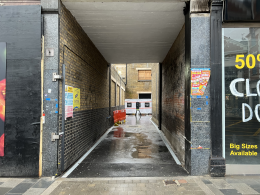
Adding eight flats would bring the total using the rear alleyway for waste collection to 21 units – creating “further obstruction” in a passage already plagued by fly-tipping and blocked access.
The logistics don’t work: the alleyway is four times further from the street than waste collection guidelines allow, Putney High Street bans loading between 7am and 7pm, there’s no dropped kerb for bins, and the passage is already cluttered with obstacles and illegal dumping. “This would be unacceptable,” officers found.
Heritage experts saw something different
The Conservation and Heritage Advisory Committee unanimously supported the application in November 2025, focused on the street-facing elevation.
The committee – including Putney Society representative Andrew Catto – welcomed retention of the distinctive stone bank frontage that architectural historian Nikolaus Pevsner identified as one of only two buildings on Putney High Street “worth even a glance.”
They felt mansard extensions were “a positive addition as it gave each building its own mansard when viewed from the street.” Their only concern was technical: how floor plates would be supported against the double-height window.
But officers noted: “No consideration was given to the rear of the property.” While only the front forms part of the local listing, officers argued the rear still needed to “fit within its existing context.”
The committee saw preservation of a heritage frontage. Officers saw a scheme that “looks to maximize floorspace, without consideration to its context or the amenity of adjoining properties.”
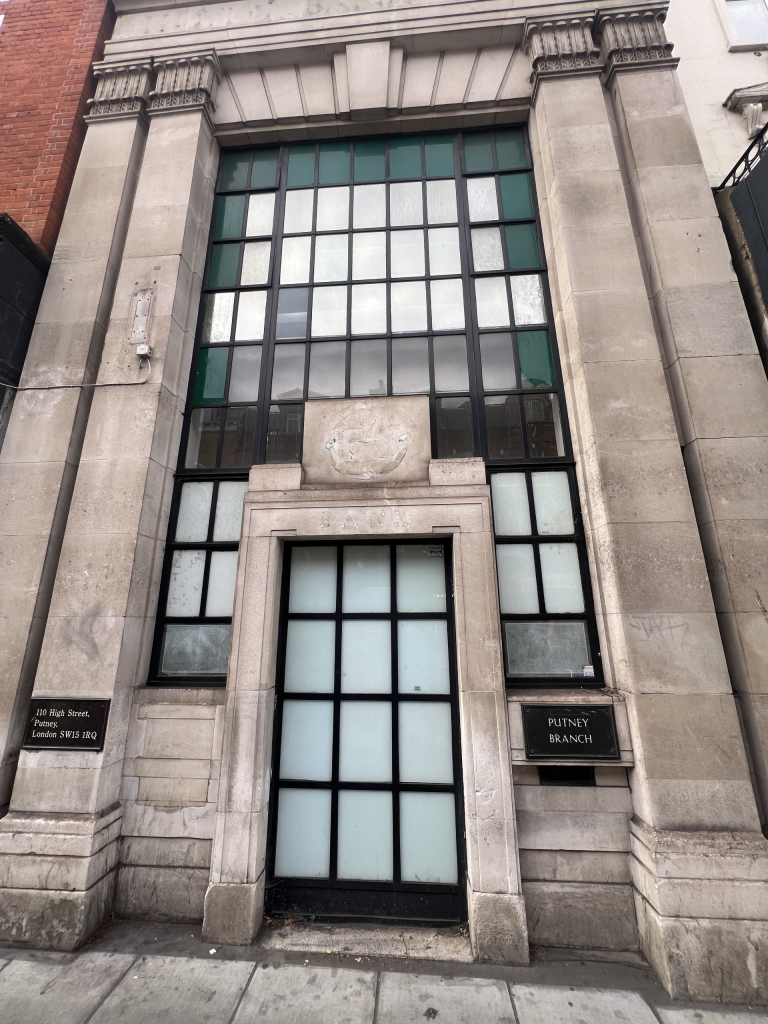
What officers wanted
While welcoming the principle of converting upper floors to housing and keeping ground-floor shops, officers found the execution fundamentally flawed.
“This proposal is trying to maximise residential floorspace, without giving any consideration to its context, the quality of the units being provided or harm to adjoining properties,” the report states.
At pre-application stage, officers had suggested alternatives like a glazed roof hatch for terrace access to avoid additional height and asked for the rear massing to be reduced. “This was an issue that was raised at pre-application and has not been resolved.”
They also objected to a front terrace on the High Street elevation: “Given the commercial nature of Putney High Street, it would be inappropriate to introduce this type of use to this elevation.”
Officers told the developer that necessary amendments “are substantial and would materially change the development proposal” – requiring the rear to be significantly reduced in bulk, the High Street terrace removed, the large front dormer replaced with three smaller ones, plus additional information on light, noise, and cycle parking. A reduction in the number of flats would be needed to solve waste collection problems.
The scheme failed five Local Plan policies covering design quality, impact on neighbours, heritage protection, pollution management, and housing standards.
The appeal – residents can comment until January 16
The developer lodged an appeal on December 5, 2025. The Planning Inspectorate will decide through written representations – no public hearing, just written submissions.
Critical dates:
- Council statement due: January 16, 2026
- Public comments due: January 16, 2026
- Final comments due: January 30, 2026
Residents who commented on the original application will be notified, but new comments can be submitted through the Planning Inspectorate portal.
To submit a comment on the appeal: Visit the Planning Inspectorate website and enter appeal reference 6002288. Full appeal details available here.
What happens now
The building remains empty 18 months after Lloyds’ closure – the seventh bank to leave Putney High Street, leaving just NatWest and Metro Bank. It was listed at £127,500/year rent and we reported in April 2024 it was “likely to remain empty.”
Whether the Planning Inspector will agree with the heritage committee’s focus on the street frontage or officers’ concerns about rear bulk, neighbour impact and living conditions will determine the building’s future.