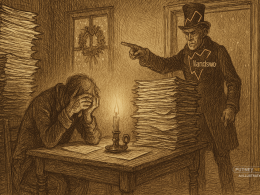
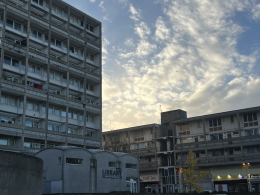
Thirty leaseholder households facing £6,000 service charges cannot get answers about a £204,000 budget discrepancy – and Wandsworth Council officials coordinated to avoid accountability by deflecting all questions to the press office, which then stayed silent.
We revealed in September that residents at Kimpton House in Roehampton face charges 400% higher than the £1,500 promised in the council’s 2021 ballot for controlled entry doors. Council budget documents show £57,000 for the project, while the Notice of Intention to leaseholders shows £261,000 – a difference no one will explain.
When one of those affected requested a deputation to Housing Overview & Scrutiny Committee in October to question the discrepancy, the council’s Democratic Services Manager rejected it. The committee was never told residents had tried to raise the issue. Three ward councillors, two senior officers, and the council press office all declined to answer questions about why.
The coordinated deflection
Within hours of receiving inquiries this week, five council officials and councillors responded with identical language: questions should go to the press office.
Ward councillors Graeme Henderson, Jenny Yates, and Matthew Tiller – who serves as Deputy Cabinet Member for Housing – forwarded questions about whether they’d responded to their constituent to the “press/comms team.” The official who rejected the deputation referred questions about that decision to the press office. And Wandsworth Council’s Assistant Director of Technical Services, asked that budget questions be “redirected” to the press office.
The press office, given until Friday to respond to consolidated questions, provided no response.
Cllr Sarah Davies, chair of Housing OSC, acknowledged an inquiry after the original deadline. When given an extension to Friday, she also did not respond. Cabinet Member for Housing Aydin Dikerdem has not responded at all.
The coordinated deflection pattern suggests officials are aware the situation is problematic but remain unable or unwilling to address it.
The money problem
In 2021, the council balloted residents on installing controlled entry doors at the 48-property block. The ballot materials stated: “The average individual leaseholder service charge should not exceed £1,500.00 inclusive.”
Council HRA budget documents from 2025 show £57,000 for “Kimpton House controlled entry doors” under Major Works. But the Notice of Intention sent to leaseholders in 2025 shows total costs of £261,000 – a difference of £204,000.
Individual leaseholders now face bills of £6,000 each, four times what they were promised in 2021.
One of those impacted has repeatedly asked the council to explain the discrepancy. In emails dating back to October, he asked: “I would very much like to understand what is causing the disparity please?”
The question was never answered. Officials acknowledged his emails but provided no explanation for the £204,000 difference.
The Building Safety Act question
Officials argue that increased costs stem primarily from “having to meet planning and building regulations in respect of the accessibility issues and the Building Safety Act 2022.”
The Building Safety Act received Royal Assent on 28 April 2022 – six months after the 2021 ballot. Key provisions were implemented in October 2023, with the full building safety regime for higher-risk buildings coming into effect in April 2024.
This raises questions about what the council knew and when. If Building Safety Act requirements were expected to substantially increase costs, why did the ballot proceed in 2021 with the £1,500 figure? When did the council realize costs would quadruple?
Leaseholders have challenged the authorities: “This Act was after the ballot and knowing full well this would have a detrimental impact on the costs that were indicated as part of the ballot this was dishonest of the Council.” To which the council responded: “The ballot was carried out in 2021 and so it was not possible to have known at that time what the impact would be on the door entry scheme.”
But the same official did not explain why there was no communication to leaseholders between 2022 (when the Act received Royal Assent) and 2025 (when the Notice of Intention arrived) that costs would increase dramatically.
The blocked scrutiny
On 19 October, the leaseholders requested a deputation to the 27 November Housing OSC meeting to ask about the budget discrepancy.
On 29 October, the council rejected the request, writing: “Unfortunately, it has been considered that the requested deputation would not be appropriate for the Committee to consider. The reason for this is that it is not related to subject matter on the agenda business to be discussed, which is a requirement of the deputation scheme. The request also appears to be more of an individual complaint type of matter, which is not something that falls under the Committee’s terms of reference or is something they would consider.”
The rejection appears questionable. The council’s management structure shows Major Works and Leasehold Management are core functions of Housing OSC. A £204,000 budget discrepancy affecting 30 households would fall squarely within the committee’s oversight role.
The 27 November Housing OSC agenda makes no mention of the deputation request or its rejection. The committee was never informed that residents had attempted to raise concerns about unexplained cost increases.
We asked the council whether a fresh request for the 21 January meeting would be accepted. It has yet to respond.
The questions that went unanswered
Putney.news sent detailed questions to ward councillors, officers, the OSC chair, and the Cabinet Member for Housing with a deadline three days later. After all five initial recipients deflected to the press office, those questions were consolidated and sent to the press office with an extended deadline.
The questions included:
On the budget discrepancy: Can you explain the £204,000 difference between budget documents and the Notice of Intention? When did the council know Building Safety Act requirements would affect costs? Why did the ballot proceed with £1,500 if costs would increase substantially?
On the deputation: Why was it rejected when Major Works and Leasehold Management are within Housing OSC’s remit? Is it standard for rejected requests not to appear in agendas? Should committees be informed when residents try to raise issues? What criteria would make the January request acceptable?
On ward councillor response: Have Cllrs Henderson, Yates and Tiller responded to their constituents’ requests for help? What information did they provide? Will they support a January deputation?
On the ballot: What is the council’s position on whether the 2021 ballot remains valid given the 400% cost increase?
None of these questions received answers by the deadline. The press office did not respond.
How other councils handle this
Research across London boroughs reveals different approaches to deputation transparency.
Richmond-upon-Thames shares the exact same Democratic Services staff with Wandsworth but uses a different – and arguably much fairer – system: individual speaker registration rather than Wandsworth’s requirement for 6-10 people, and a noon deadline rather than 5pm.
Southwark requires committees to vote publicly on receiving each deputation, creating a record of the decision. Hackney’s constitution explicitly states: “If your deputation has not been accepted, you will be advised of the reason(s) why.” Islington requires the Monitoring Officer to enter all questions in a book “open to public inspection” including rejected questions with reasons.
Wandsworth publishes neither rejected deputation requests nor the reasons for rejection.
What happens next
The January 21 Housing OSC meeting is five weeks away. The council has not confirmed whether a deputation request for that meeting will be accepted.
Even if accepted, the £204,000 budget discrepancy remains unexplained. Leaseholders face £6,000 bills with no detailed cost breakdown showing where the money will go.
The coordinated deflection pattern documented this week suggests officials recognise the situation is problematic. But deflection is not accountability. Thirty households deserve answers about why they’re being charged four times what they were promised – and why no one at the council will explain the £204,000 gap.
Accountability Statement
We contacted: Ward councillors, relevant council officers, the Housing OSC chair, and the Cabinet Member for Housing
Request sent: 9 December 2025
Cllr Graeme Henderson (Labour, Cabinet Member Health)
Cllr Jenny Yates (Labour, Cabinet Member Transport)
Cllr Matthew Tiller (Labour, Deputy Cabinet Member Housing)
Roehampton Ward Councillors
Status: Deflected to press office, 11 December.
Questions asked (click to expand)
XXXX [name removed] contacted you about this in October. Have you been able to respond or look into it?
If you have responded, what were you able to tell him?
Would you support their deputation request for January 21 Housing OSC?
Chris Kelly
Democratic Services Manager, Wandsworth Council
Status: Deflected to press office, 11 December.
Questions asked (click to expand)
The council’s management structure shows Major Works and Leasehold Management are core Housing OSC remit. Can you help us understand the reasoning for the rejection?
The November 27 agenda doesn’t mention the deputation request or the decision. Is this standard practice? We’re interested in how transparency works in these processes.
Should committees be informed when residents attempt to raise issues, even if requests are rejected?
For January 21, what would make a similar request acceptable? We’d like to understand the criteria.
If Housing OSC isn’t the right forum for leaseholders to question service charge increases, where should they go?
Sharron Lecky
Assistant Director Technical Services, Wandsworth Council
Status: Deflected to press office, 11 December.
Questions asked (click to expand)
Can you help us understand the £204,000 difference? Are these different project scopes, different accounting methods, or are we misunderstanding something?
When did the council become aware that Building Safety Act requirements would affect this specific project’s costs?
If the council knew costs would increase substantially, can you explain why the 2021 ballot proceeded with the £1,500 figure?
What’s the technical explanation for the cost increase that leaseholders should understand?
When will leaseholders receive detailed cost breakdowns?
What’s your view on whether the 2021 ballot remains valid?
Wandsworth Council
Press Office
Status: Failed to respond.
Questions asked (click to expand)
Democratic Services / Deputation Process:
Can you explain why the October deputation request was declined when Major Works and Leasehold Management appear to be within Housing OSC’s remit?
Is it standard practice for rejected deputation requests not to appear in committee agendas?
Are committees typically informed when residents attempt to raise issues, even if requests are declined?
What criteria would make a similar request acceptable for the January 21 meeting?
If Housing OSC isn’t the appropriate forum for leaseholders to question service charge increases, where should they direct such concerns?
Ward Councillor Response:
Have Cllrs Henderson, Yates and Tiller been able to respond to Steve Fannon’s October contact about this issue?
If they have responded, what information were they able to provide?
Will they support the deputation request for January 21?
Technical / Budget Questions:
Can you explain the £204,000 difference between the budget documents (£57k) and Notice of Intention (£261k)?
When did the council become aware that Building Safety Act requirements would affect this project’s costs?
If costs were expected to increase substantially from the 2021 ballot figure, can you explain why the ballot proceeded with the £1,500 estimate?
What’s the technical explanation for the 400% cost increase that would help leaseholders understand?
When will leaseholders receive detailed cost breakdowns?
What is the council’s position on whether the 2021 ballot remains valid given the cost increase?
Cllr Aydin Dikerdem
Cabinet Member Housing
Status: No response.
Questions asked (click to expand)
Can you help explain the £204,000 budget discrepancy? We want to ensure we understand the figures correctly.
What’s the timeline for providing leaseholders with detailed cost breakdowns?
On the deputation – can you share your thinking on why it wasn’t appropriate for Housing OSC?
Would you support accepting a deputation for January 21?
If residents can’t raise these questions at Housing OSC, what forum would you suggest?
What’s your view on whether the 2021 ballot remains valid given the cost increase?
Cllr Sarah Davies
Housing OSC Chair
Status: Acknowledged inquiry after deadline, given extension, no response provided
Questions asked (click to expand)
Were you consulted about the deputation request? We’d like to understand how these decisions are made.
Did you know before now that residents had requested to address your committee about this issue?
As chair, do you think there’s value in committees being informed when residents attempt to raise housing issues, even if requests don’t proceed?
What would you look for in a well-framed deputation request on leaseholder service charges for January 21?
How do you see the committee’s role in helping residents get answers about unexplained cost increases?