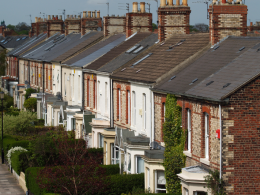
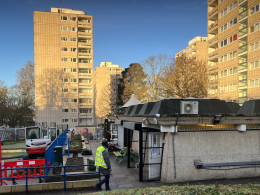
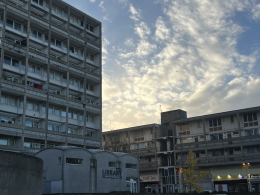
Two development sites in Putney have become the testing ground for a political fight over how much “affordable housing” developers must include in new building schemes.
Under current London rules, around a third of new homes must be offered at below-market rents or prices. The government now wants to cut that requirement to one in five, or 20%, while Wandsworth Council wants to raise it to one in two, 50%.
The contrast could not be starker.
While Mayor Sadiq Khan faces heavy criticism for reportedly backing a huge reduction in affordable housing rules – a move one expert has warned could become Labour’s “tuition-fees moment” – Wandsworth’s Labour leadership is heading in the opposite direction.
Next month, the council will face a three-day public examination [pdf] in front of the Planning Inspectorate to defend its 50% target, which the Mayor’s own planning team has already branded “unviable.”
Putney used as test case
As part of its Local Plan “partial review”, Wandsworth modelled five example sites across the borough to test whether developers could afford to deliver half their homes as affordable units and still turn a profit.
Two of those trial sites are in Putney (postcode SW15):
- Redevelopment of an educational facility
- Redevelopment of a public surface car park
They are not live planning applications, but the borough’s entire case for the 50% target partly rests on showing that developments like these could, in theory, be financially viable.
In a sharply worded letter [pdf] to the council back in February, the Mayor’s planning team warned that most of the borough’s own viability tests “appear to be unviable,” and that Wandsworth’s approach “is not in general conformity with the London Plan.”
Officials say the higher threshold would discourage developers, slow down planning applications, and ultimately result in fewer affordable homes being built – the opposite of what the policy intends.
A planning stalemate in Putney
The effect is already visible on the ground.
Putney has seen no significant new housing development for the past two years. Developers and landowners describe a system paralysed by uncertainty, caught between national proposals to lower targets, local ambitions to raise them, and a raft of new planning and infrastructure fees that have made most projects financially impossible.
Even modest schemes are being shelved as costs stack up. One local agent described it as “death by policy” with everyone waiting to see which direction housing rules will actually go before committing millions of pounds to new builds.
The Inspectorate’s hearings open on Tuesday 4 November at Wandsworth Town Hall. The entire second day – Wednesday 5 November – is devoted to affordable housing policy.
At the same time, sources expect the government to confirm plans to reduce London’s affordable housing target from 35% to 20%, a move negotiated between Housing Secretary Steve Reed and Sadiq Khan.
If that announcement lands during the hearings, it could undercut Wandsworth’s defence entirely, allowing developers to argue that even the Mayor and the government believe 20% is the realistic limit.
“Decision-making in desperation”
Professor Tony Travers of the London School of Economics told the London Forum AGM last week that slashing targets would be “decision-making in desperation,” warning that it could become Labour’s “tuition fees moment.”
“At present people blame developers for the lack of affordable homes,” he said. “Now they will blame Sadiq Khan and Labour for all the problems with housing. No one will ever forget the day the Labour government sold out to developers.”
Wandsworth’s Cabinet Member for Housing Aydin Dikerdem however argues the exact opposite: that the percentage of affordable houses should be increased, arguing that cutting targets would be a “huge blow” to social housing delivery.
Leanne Tritton, Chair of the London Society, told the same meeting that politicians and organisations were “playing whack-a-mole” with individual developments instead of tackling the system.
“The elephant in the room is that we no longer build housing as infrastructure for our people,” she said, comparing policy targets to “telling a baker that every dozen loaves they bake, they must give 35% away.”
With Wandsworth trying to push that share to 50%, and the government about to slash it to 20%, Putney now sits at the crossroads of an ideological battle over who should build homes for local people, and who should pay for them.
Professor Travers predicts the fallout could reshape local politics. “Given that planning and development aren’t that popular,” he said, “I can see opposition parties using this as a weapon in their manifestos.”
The Inspector’s report on Wandsworth’s Local Plan is due early 2026 – just months before the next local elections.
What happens next
The Planning Inspectorate examination runs 4–6 November at Wandsworth Town Hall, with a reserve week if needed. The government’s 20% announcement is expected as early as next week.
For Putney residents, the outcome could determine whether future developments deliver genuine community benefit or whether developer profits, political point-scoring, and policy confusion continue to block new homes altogether.