The ballot papers went out in September. Three weeks to vote, by post, online, or phone. An independent company administered it. Information events ran through the summer. The council built a comprehensive website with FAQs. There was even a dedicated computer in Roehampton Library for residents who wanted to use it.
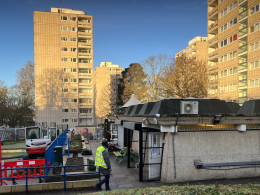
Banners and signs about the ballot were displayed across the estate. A large billboard on the shuttered shops at the end of Danebury Avenue advertised the vote.
When the results were announced today, they showed 82.4% of those who voted backed the £100m redevelopment. But the turnout figure told another story: 41.5% of the 3,395 eligible voters cast ballots. Nearly six in ten residents didn’t participate in a decision about demolishing 177 homes and building 650 new ones.
This morning – the day after the ballot closed and hours before results were announced – Putney.news went to the estate to ask residents what they thought. What we found helps explain that 58.5% non-participation rate.
“I didn’t even know about it”
Standing outside the shops on Danebury Avenue, a young mother pushing a buggy stopped when asked about the ballot. “I didn’t even know about it,” she said. She lives on the estate. The ballot was about her neighbourhood.
A woman in her thirties, hurrying to take her children to school, hadn’t heard of it either. “I don’t have time for that sort of thing,” she explained, shepherding her kids along the pavement.
Near the community centre, a man in his late thirties confirmed he’d received something in the post about a vote. He knew what it was about. He chose not to vote. “I think they’re going to do what they’re going to do anyway,” he said. “So there’s no point in voting.”
We spoke with 20 residents across different parts of the estate. Some hadn’t heard about the ballot. Some had received papers but didn’t vote. Several didn’t understand what they’d been sent. One consistent thread: a sense that voting wouldn’t make a difference anyway.
“My English not so good”
Two Polish women who live on the estate remembered receiving something through the post. But their English, they explained, wasn’t good enough to understand what it was about. So they didn’t respond to it.
When told what the ballot concerned – plans to demolish and rebuild large sections of the estate where they live – they thought it sounded like a good idea. “If they going to improve all of Roehampton, that would be good,” one said.
Another young woman at the university said she lived on the estate but never received a ballot paper. A second resident echoed this – she wasn’t aware any vote had taken place.
The few who voted
Among the small number of residents encountered yesterday who said they had voted, most were supportive. Adane, who runs Café Joy near the estate, voted yes. As a council tenant living nearby, he hopes the development will bring more customers to his business and improve the area.
One woman who’d voted yes was in a rush and wouldn’t say why. Another simply said she thought it was a good idea to have more people in the area.
One man, wearing an American-style “Make Britain Great Again” red cap, confirmed he’d voted no. His reason: “They’re just going to move a bunch of Somalis in.” He said he was “pretty much the only white person on the estate” and suggested they should “build it in Somalia if that’s what they want to do.”
This was the only explicitly negative vote encountered during yesterday’s reporting, though several residents expressed general scepticism about whether the redevelopment would benefit existing residents.
What was at stake
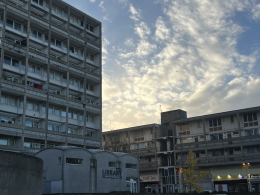
The vote asked residents whether to approve plans that would demolish homes on Harbridge Avenue, Kingsclere Close, parts of Danebury Avenue, and Portswood Place – 177 homes in total – and replace them with between 600 and 650 new homes. That’s a net increase of around 450 homes.
The proposals also included a rebuilt shopping parade with a larger supermarket, a new GP surgery, new community spaces, and a village green. Fifty-seven percent of new homes would be “affordable”, meaning below market rent or purchase price.
Council tenants and leaseholders whose homes would be demolished were promised new homes on the estate, with financial help to move. Current Alton residents on the council housing waiting list would get priority for remaining new council homes.
The ballot was required under Greater London Authority rules for estate regeneration schemes. The council said it gave residents “the final decision” on the plans. The redevelopment would only proceed if more people voted yes than no.
The disconnect
Wandsworth Council and its ballot administrator, Civica Election Services, ran what appears on paper to be a thorough consultation process. The ballot was open for three and a half weeks. Multiple voting methods were available. Information sessions were held over the summer. Physical signage was visible across the estate.
Today’s results showed 1,161 residents voted yes—giving the council its mandate to proceed. But they also showed that 1,986 eligible voters didn’t participate at all. That’s more people than voted yes.
The street reporting from yesterday morning offers a glimpse into why: language barriers that prevented understanding the materials, residents who never received ballots despite living on the estate, and a deep-seated belief among some that their vote wouldn’t matter anyway.
We contacted the council for comment.