


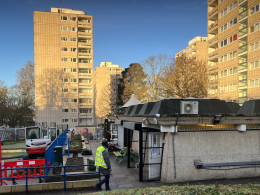
The ballot on the future of the Alton Estate opens today, with more than 13,000 residents asked to decide whether to approve a £100m demolition-and-rebuild scheme backed by Wandsworth Council and the Mayor of London.
But while glossy brochures [pdf] promise modern homes, new shops and a community hub, many leaseholders say they have seen enough to doubt whether the council’s figures can be trusted. Their evidence comes not from abstract projections, but from the bills landing through their letterboxes.
The door that quadrupled in cost
At Kimpton House, a single block on the estate, leaseholders are reeling from the latest shock: a new Notice of Intention for entry doors demanding £6,053 per flat.
The same project was budgeted at £59,000 earlier this year. Now it is £260,000 – a fourfold increase. For years, council letters had assured residents the scheme would not exceed £1,500 per leaseholder, a figure repeated in 2010, 2014 and 2021 ballots. After two failed votes, the plan was finally approved in 2021 on the strength of that pledge.
Leaseholders now say the ballot was won on false pretences. “Leaseholders are not ATMs,” one complained, calling for the vote to be re-run.
The door is not the only looming cost. Budget papers confirm lift refurbishments at the same building in 2027–28, estimated at £6,496 per flat. That means residents face more than £12,000 in charges within two years, on top of normal service bills.
Leaseholders fear a repeat of the door debacle, with estimates quietly multiplied once the work is unavoidable.
The hidden costs of LASER
Elsewhere on the estate, anger is focused on energy bills. Wandsworth Council regularly applies for dispensation from consulting leaseholders on gas and electricity supply, tying estates into a LASER bulk-purchasing contract.
Leaseholders say the scheme offers poor value and little transparency. They claim they are effectively paying twice: once through council tax for public lighting, and again through service charges for estate lighting. Requests for a cost breakdown since energy-saving bulbs were installed in 2020 have been stonewalled.
One resident, who has already taken part in a property tribunal over a similar LASER scheme in Lambeth, argues the council knows leaseholders cannot afford the legal fees to challenge bills that can run into thousands of pounds.
Why it matters for the ballot
For tenants, the regeneration promises a new secure tenancy at similar rents. But for leaseholders – those who have bought their homes, often under Right to Buy – the risks are far greater.
The Landlord Offer provides no projections for future service charges in the new development, despite including features like lifts, CCTV, door entry, and heating networks that typically drive costs higher. Shared equity buyers will carry full liability for those charges, with no right to sublet if they cannot afford them.
Critics say the door, lift, and LASER disputes show exactly what happens when residents are asked to trust the council’s numbers.
A record of failure
The Regulator of Social Housing has already rated Wandsworth’s housing department as C3: “seriously failing”. Leaseholders say the pattern is now impossible to ignore: costs are underestimated, transparency is lacking, and complaints are left unresolved.
One resident summarised it bluntly: “If they can quadruple the cost of a single entry door, what chance is there they’ll deliver a £100m rebuild on time and on budget?”
The regeneration ballot runs until 16 October. If approved, it would demolish up to 178 homes and replace them with 600–650 new ones, alongside new shops, a library, and health facilities.
But for leaseholders already facing £12,000 bills and unanswered questions about energy charges, the decision may rest less on glossy promises and more on bitter experience.
For many, the doors have already closed on trust.


1 comment