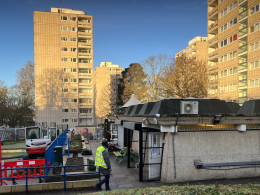
Starting tomorrow and running until 16 October, residents of the Alton Estate in Roehampton will finally have their chance to vote on whether to back Wandsworth Council’s £100 million regeneration scheme: something that has been promised for over a decade.
The vote is simple: say “yes” and the council will demolish 177 homes at the main entrance to the estate and replace them with up to 650 new ones, alongside new shops and community facilities. Say “no” and the estate remains as it is, with small-scale upgrades.
The ballot matters beyond the estate itself. A “yes” would unlock £16 million in Greater London Authority funding – which the council needs to afford the new construction – but it will also mean 1,000 or more extra residents moving into Roehampton, with no new transport links promised.
‘Yes’ would mean a refresh of an estate but lead to years of construction and then years of overcrowding; ‘no’ would mean residents will be left with outdated and poorly maintained buildings for years to come.

What’s on the table
The ‘Landlord Offer‘ [pdf], delivered to residents this month, sets out the basic details:
- Demolition: 177 homes, mainly on Harbridge Avenue, Kingsclere Close, parts of Danebury Avenue and Portswood Place.
- Rebuild: 600–650 homes, creating a net gain of 400–450 units.
- Affordable housing: 57% of the new homes, including 130 additional council flats for social rent.
- Community facilities: a new or updated GP surgery, family hub, youth space, library, supermarket and more green space.
- Funding: £84m from the council’s housing funds, £16m from the GLA (only available if the ballot passes), and the rest from private housing sales.
- Timeline: A planning application by June 2026, with building in phases over at least a decade.
The council insists existing tenants will only move once – into a new home before demolition – and that the project will fix long-standing problems of sewage leaks, damp, and structural decline.
There needs to be a simply majority of residents saying ‘yes’ for it to pass – even if only one person votes in favour it would pass – but for legitimacy, the council will need thousands of votes.

Who gets what
Existing council tenants are guaranteed a new home at social rent, either on the new Alton or elsewhere. Overcrowded families will be offered larger homes; those with extra bedrooms will need to move to a smaller place. A compensation payment of £8,100 and moving costs are included.
Those that own their flats – leaseholders and freeholders – will receive the “market value” of their home plus 10% (up to £81,000) if they live there, or 7.5% (up to £75,000) if they do not. The council will cover legal, survey and removal fees.
But, notably, valuations are based only on sales of other ex-council flats in similar condition, not the wider Roehampton housing market. That means payouts may fall far short of local prices and residents could be priced out of their own neighbourhood.
On the Alton Estate, leaseholders can expect valuations based only on other ex-council flats in similar condition, which typically sell for £335,000–£365,000. With the 10% home loss payment (capped at £81,000), most payouts would land in the £370,000–£400,000 range. But the wider Roehampton housing market averages around £659,000, meaning many leaseholders will struggle to buy back into the local area without entering restrictive shared equity schemes.
To cover the difference in what people receive for their home from the council and what it will cost to buy a new one in same area, leaseholders will be offered a council’s shared equity scheme – where the council owns some of your home – which can be paid back slowly over time. But this agreement also comes with strict limits on subletting and inheritance.
Service charges – which are likely to double from around £1,000 – £2,000 a year to around £2,000 – £4,000 – will be extra.
Private renters have no right to return, though the council promises advice and possible financial help.
Tenants in temporary accommodation will be moved elsewhere, with a chance of permanent rehousing depending on waiting list position.
The council has not provided a breakdown of how many of each type of resident are in the blocks that would be demolished under the plan.
| Reasons to vote Yes | Reasons to vote No |
|---|---|
|
• Unlocks £16m of GLA funding that cannot be accessed otherwise. • Promises 130 more council homes at social rent. • Replaces failing blocks plagued by leaks, damp and neglect. • New GP surgery, library, youth hub and supermarket. • One-move guarantee for council tenants, with secure tenancy protected. • Energy-efficient homes that should be cheaper to heat. |
• Leaseholder payouts undervalued, based only on ex-council flat sales. • Service charges not disclosed — future bills could be far higher. • Housing mix leans toward one-beds and two-beds, not family homes. • No new transport plans despite 1,000+ extra residents. • Private renters and temporary tenants offered little or no security. • Demolition means loss of modernist heritage Pevsner once called “brilliant.” • Viable refurbishment alternative (“People’s Plan”) sidelined. |
The housing mix
The Landlord Offer does not contains details about how many different sizes of flats there will be in the new construction (e.g. one-bedroom, two-bedroom, three-bedroom; nor does it indicate how large those flats (bedrooms, bathrooms, kitchen etc) will actually be.
However we understand that the new plans would build: 237 one-beds, 177 two-beds, 211 three-beds and just 22 four-beds. Most of the demolished homes are three-bedroom family units. Critics say this assumes older residents will downsize to free up bigger homes, but there is little evidence people actually want to. Families needing larger homes may struggle to find a match.
More than 1,000 new residents are expected if the scheme goes ahead. Yet the offer includes no new transport plans. Roehampton already relies almost entirely on buses along Roehampton Lane, with no Tube or rail station in walking distance. Schools, GP surgeries and parking are also under pressure.
Community facilities – a new library, GP surgery and youth hub – are welcome, but they largely replace what already exists. Questions remain about whether the area can absorb the extra capacity.
|
If you are a council tenant • You are guaranteed a new secure tenancy at social rent. • Overcrowded households will be offered a larger home. • If you are under-occupying, you can keep one extra bedroom or accept a downsizing incentive. • You will receive £8,100 compensation and moving costs covered. • The council says you will only need to move once. |
If you own your flat (leaseholder/freeholder) • You will receive “market value” plus 10% (up to £81,000) if you live there, or 7.5% (up to £75,000) if you don’t. • Legal, survey, removal and stamp duty costs are covered. • Valuations are based on other ex-council flats, not wider Roehampton prices. • You can buy into a new home through the council’s shared equity scheme, but with restrictions on subletting and inheritance. • Service charges for new homes are not yet disclosed. |
|
If you live in temporary accommodation • You will be moved to another temporary home. • You may be offered permanent housing, but this depends on your position on the waiting list. |
If you rent privately • You do not have a guaranteed right to return. • The council says it will provide advice and possible financial help, but you may need to find a new home yourself. |
The bigger picture
This is not the first time the Alton Estate has been earmarked for regeneration. Previous schemes collapsed — including a 2019 plan with developer Redrow — leaving residents in limbo. Campaigners say the council’s new proposal risks repeating mistakes by over-promising and under-delivering.
Architectural heritage adds another layer. The estate has been praised as one of the best examples of 1950s modernist planning, with several Grade II* listed towers. Demolition will wipe away large parts of history.
The choice is stark. A “yes” vote promises new homes, new facilities, and long-awaited investment, but comes with uncertainty for leaseholders, the loss of family-sized housing, and more pressure on Roehampton’s fragile infrastructure. A “no” means continued decline and no access to GLA funding, though the council will still deliver a smaller “early improvement plan” of a community hub and 50 new council homes.
After decades of failed schemes, residents now hold the decision. The question is whether they trust the council’s promises — or fear being left worse off once the bulldozers move in.